


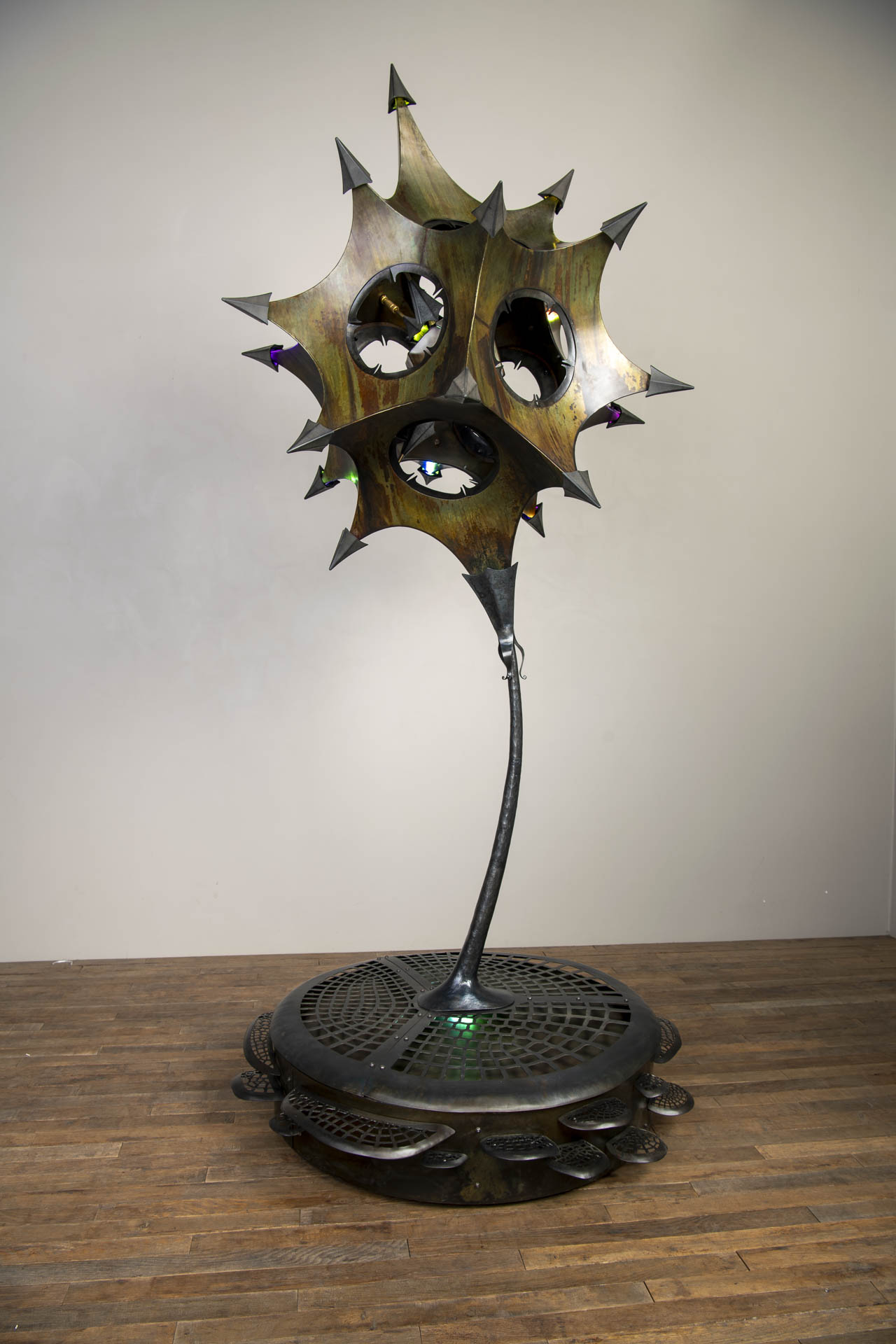



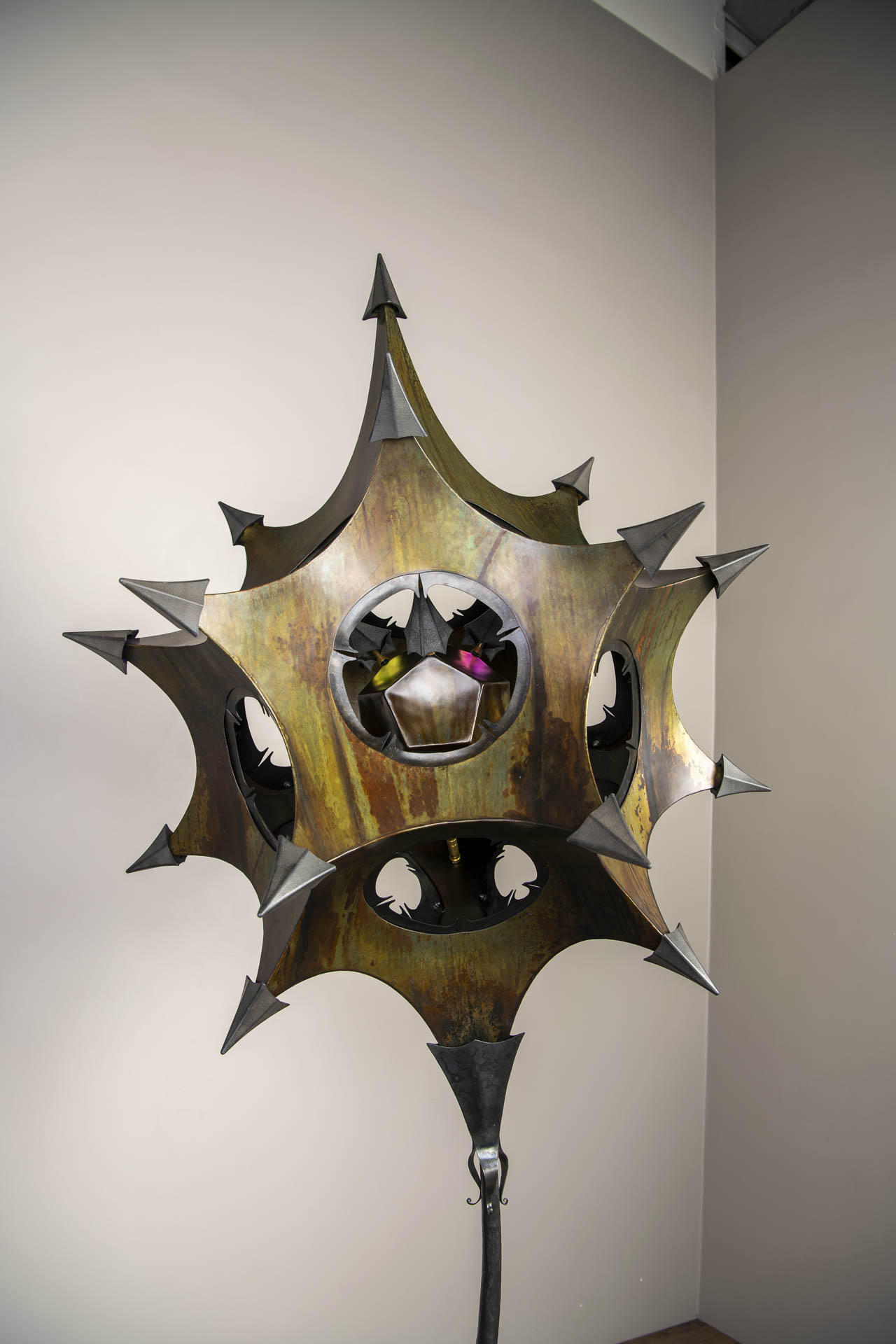


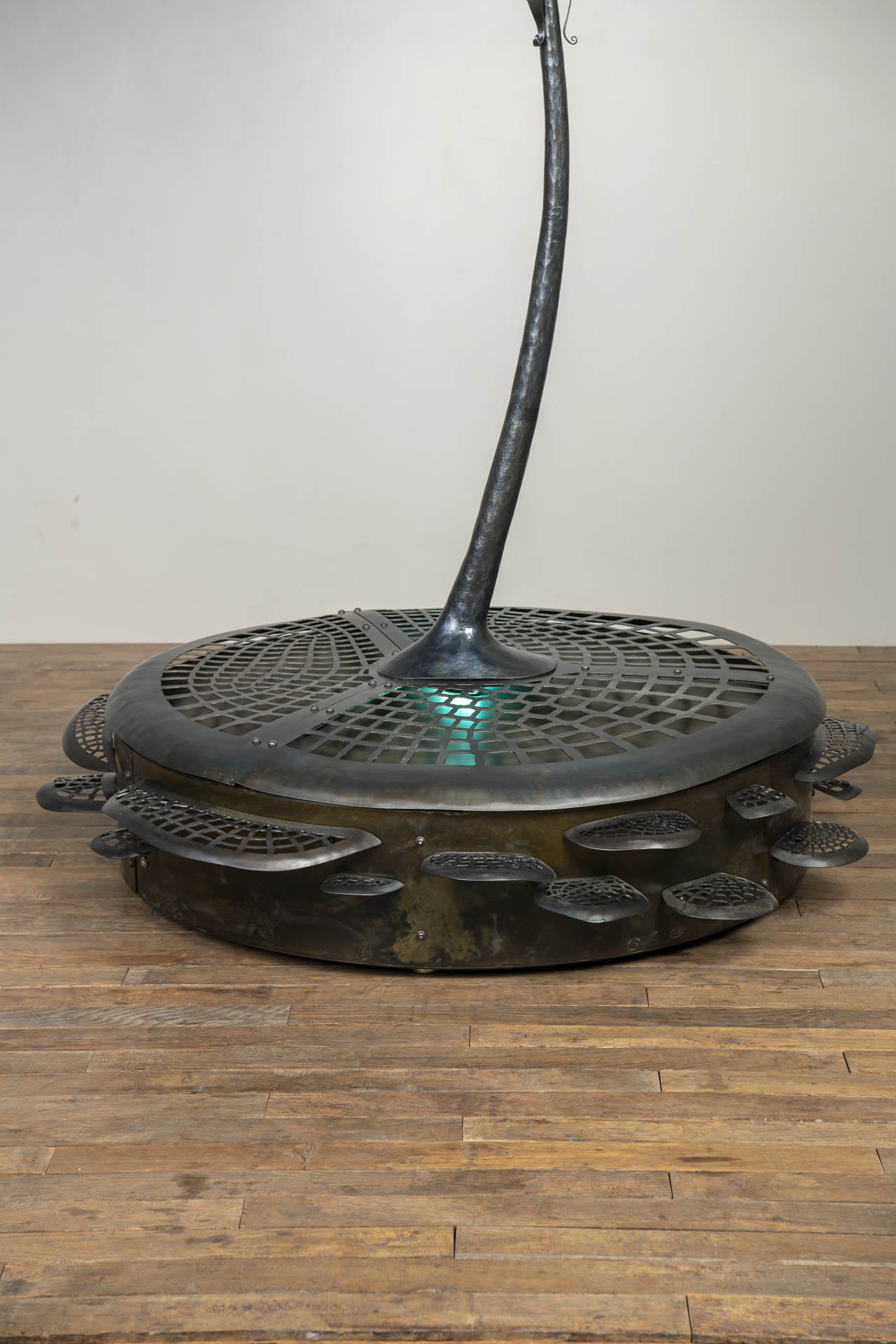


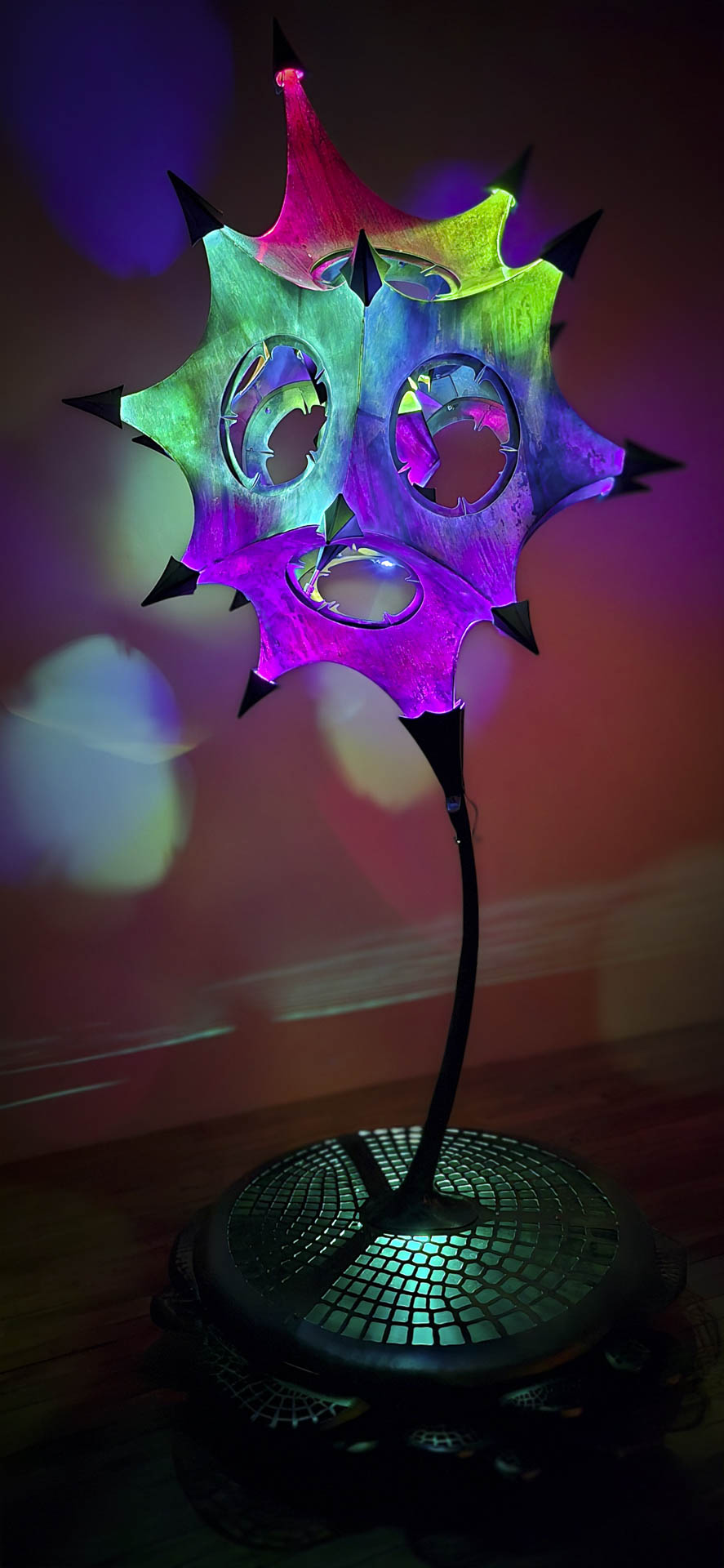


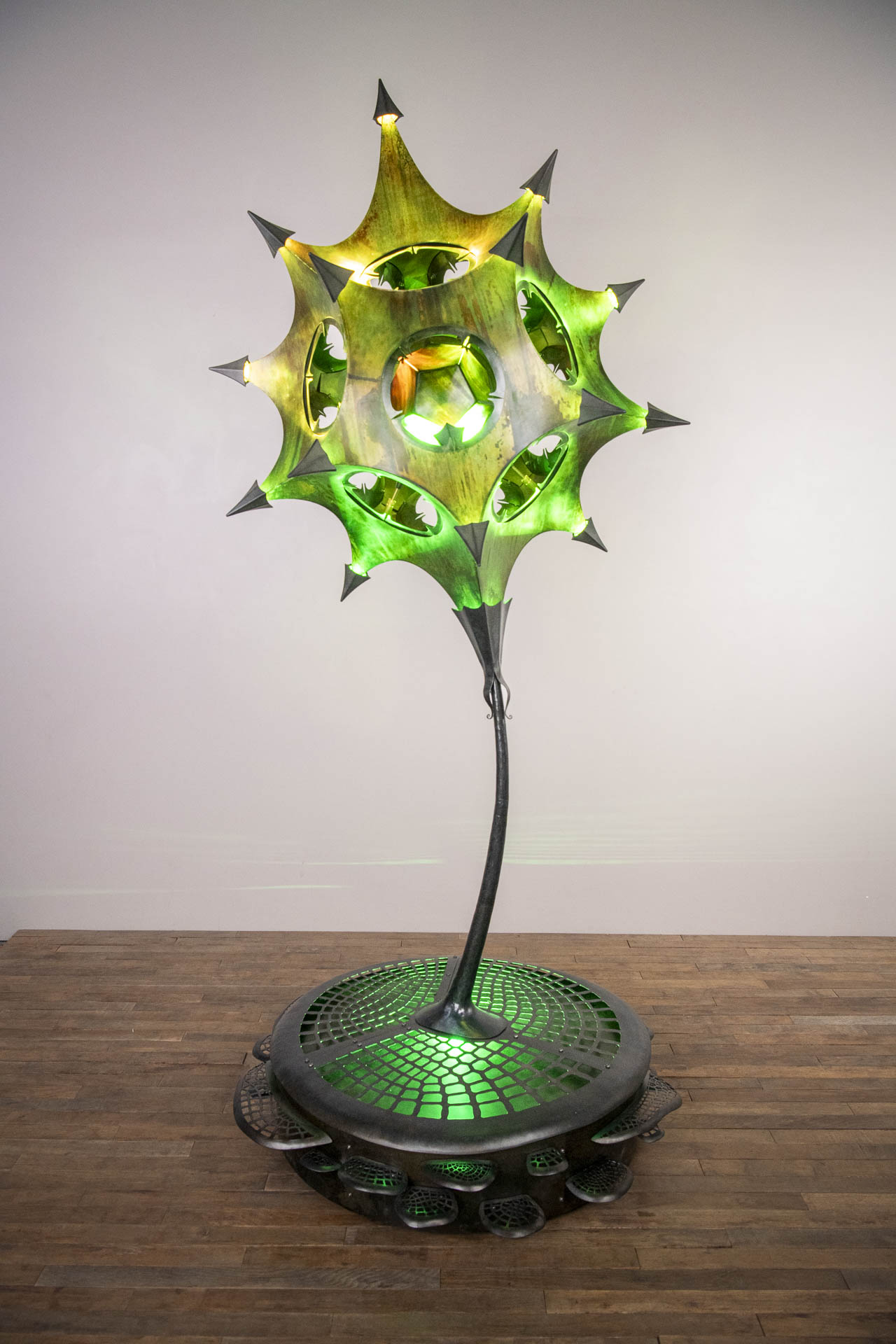


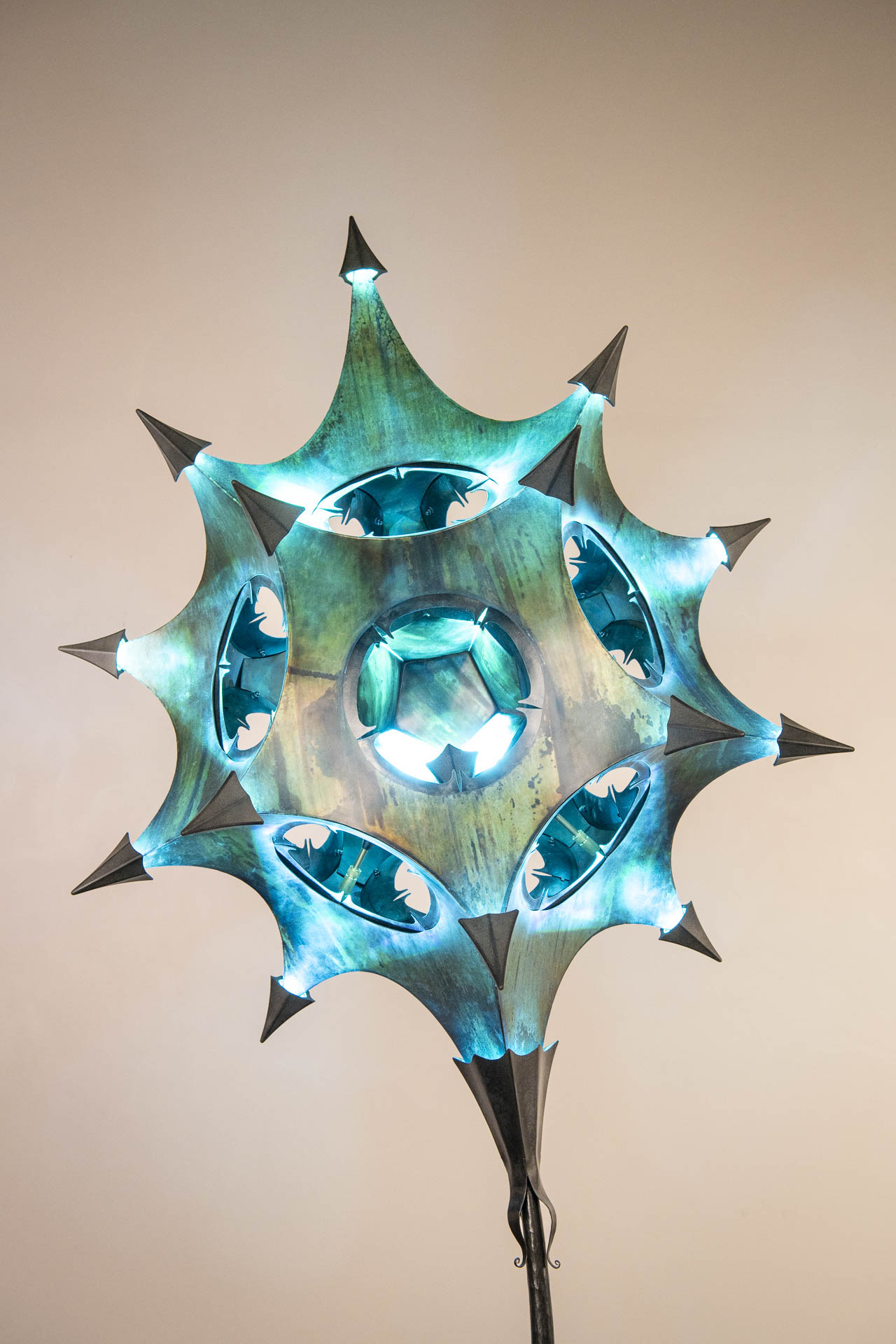
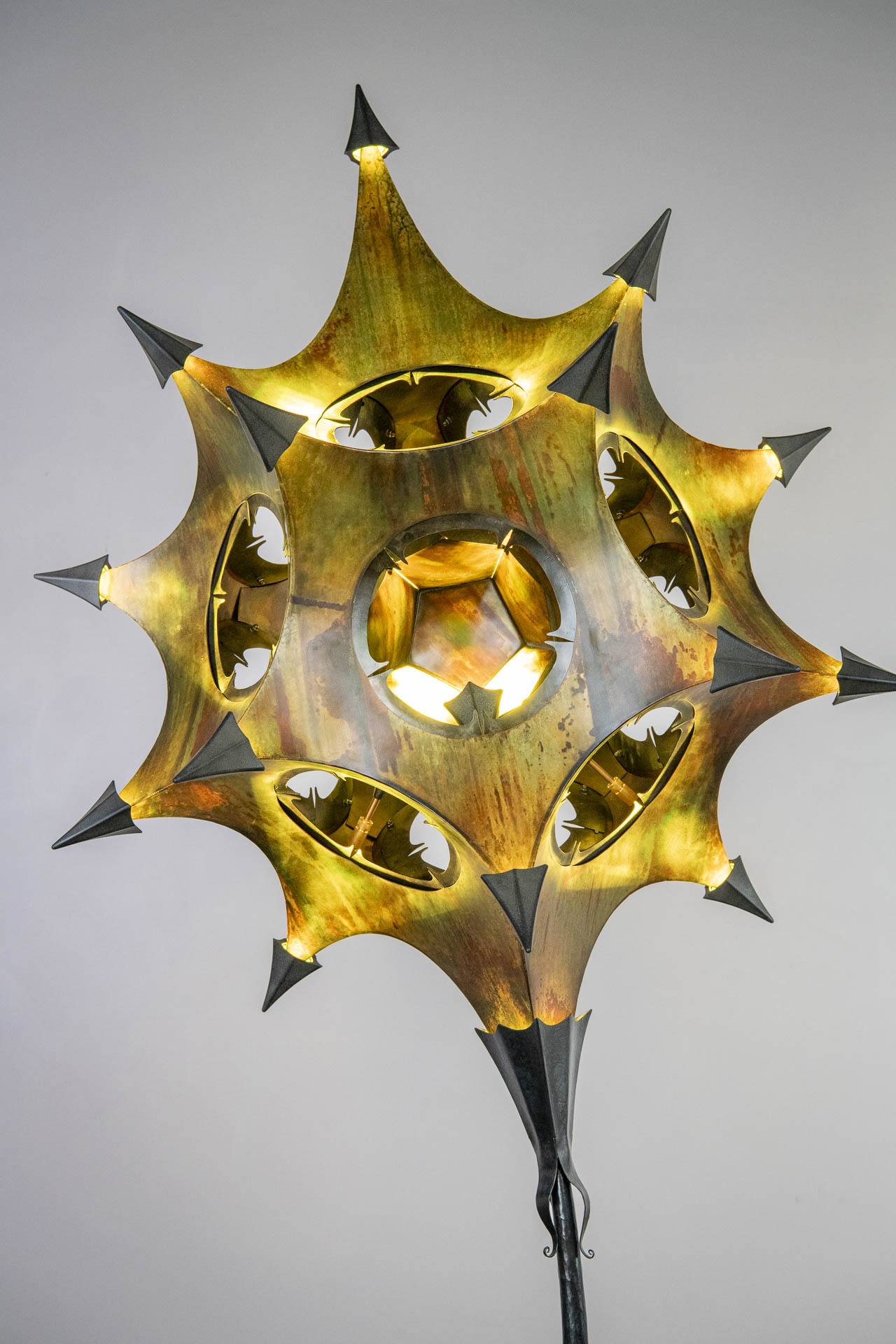


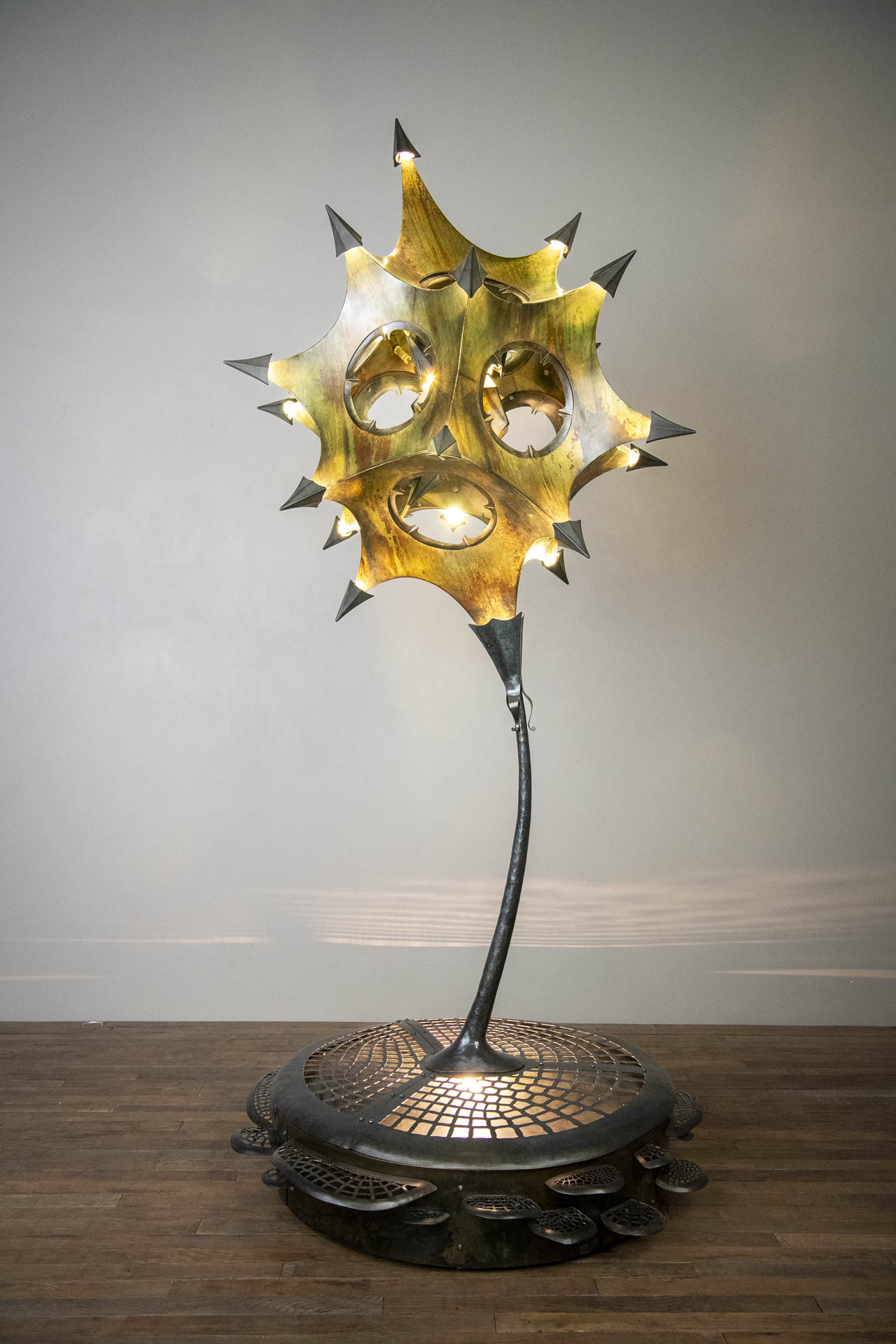


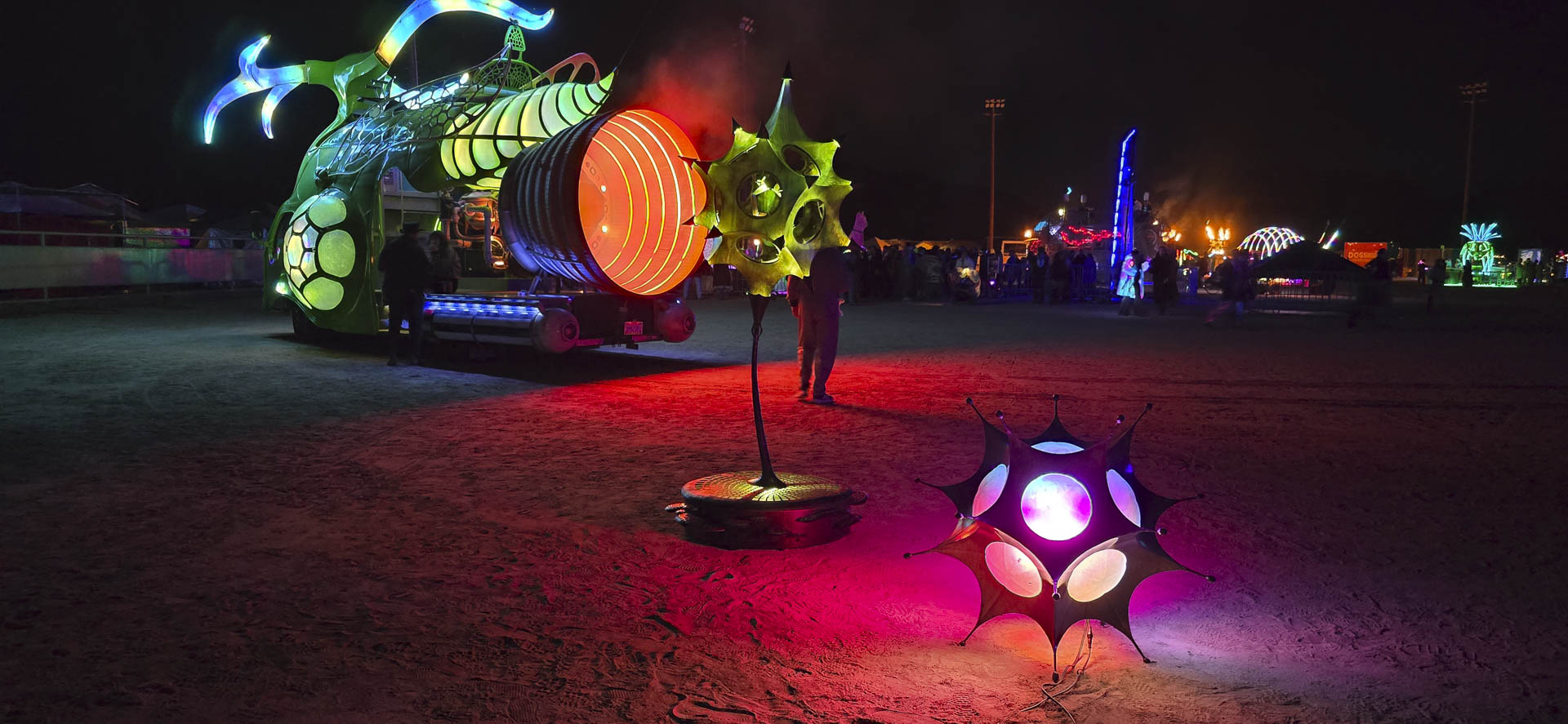
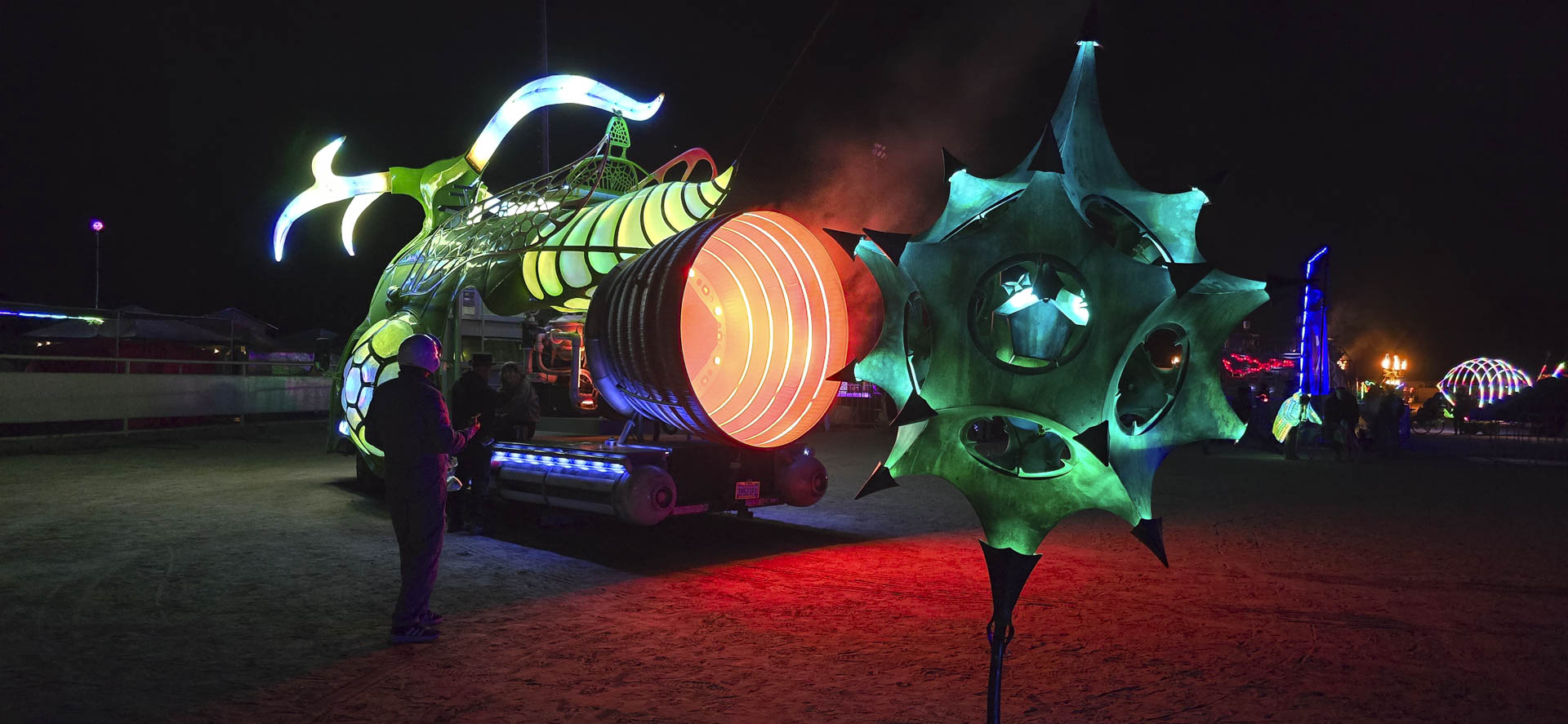
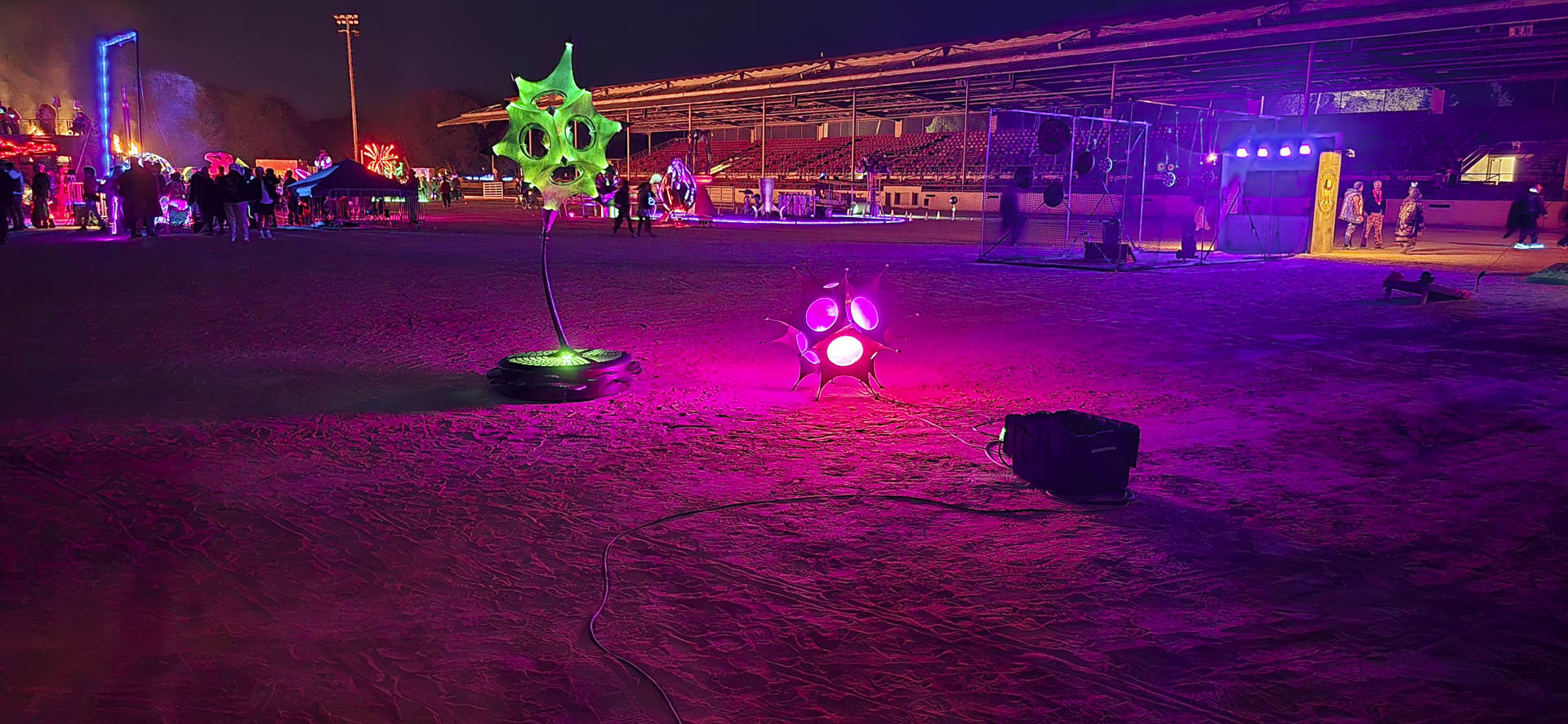
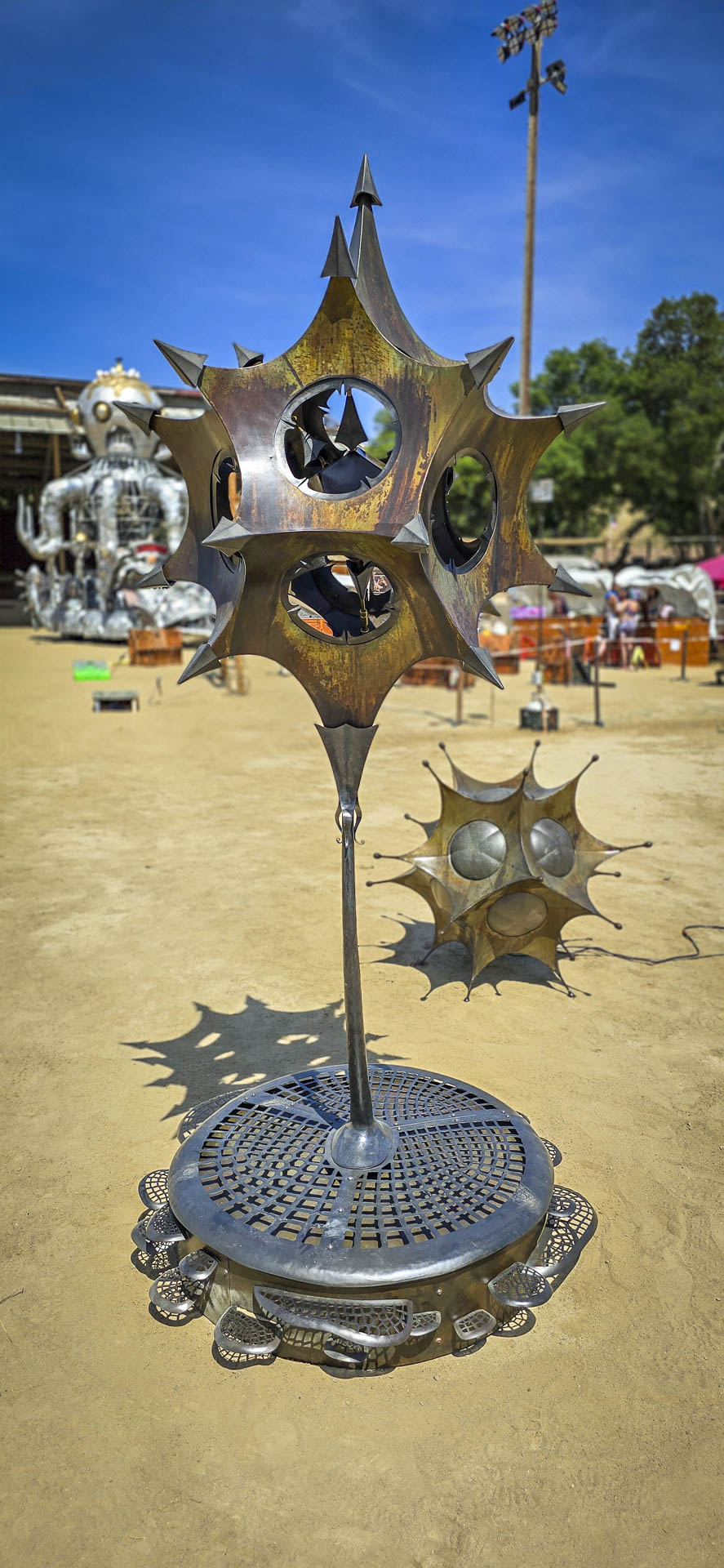

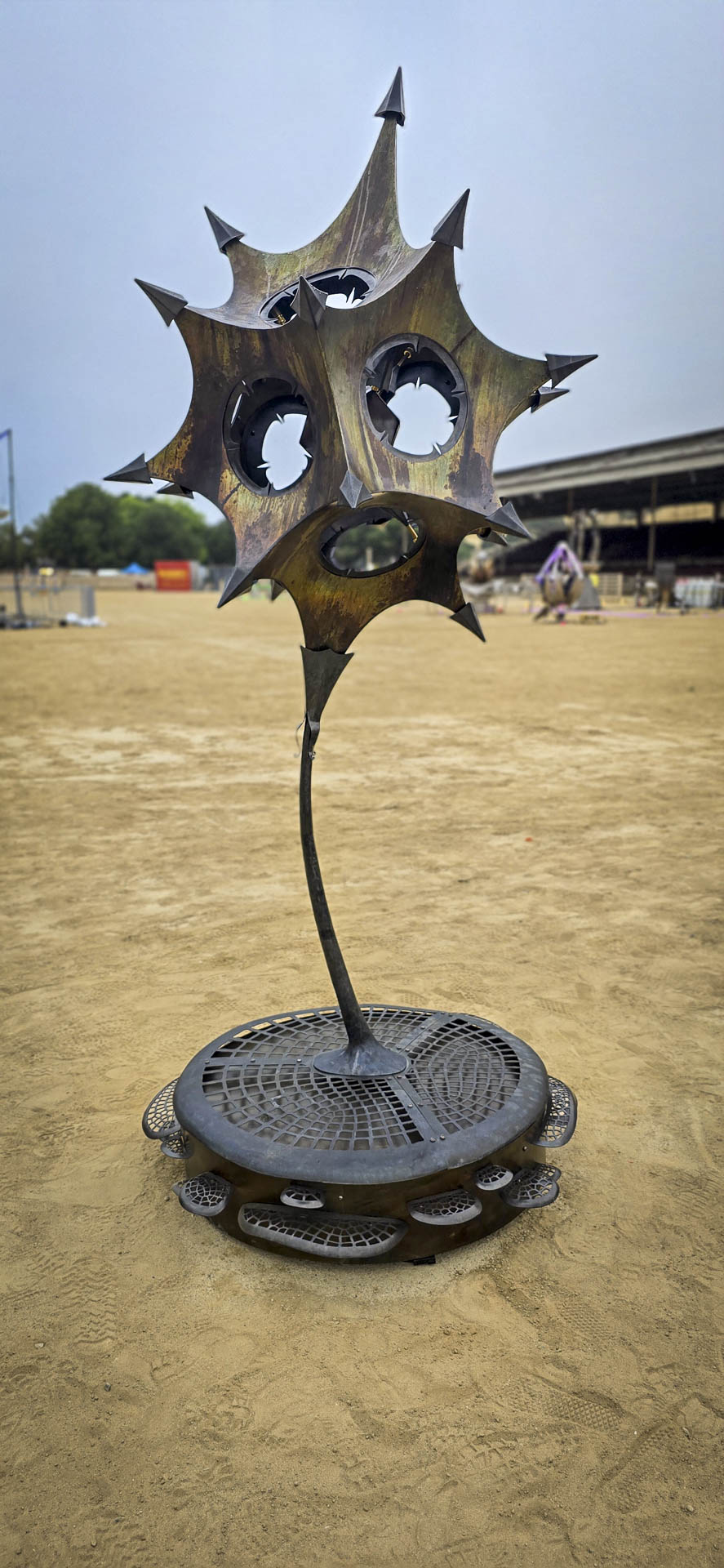


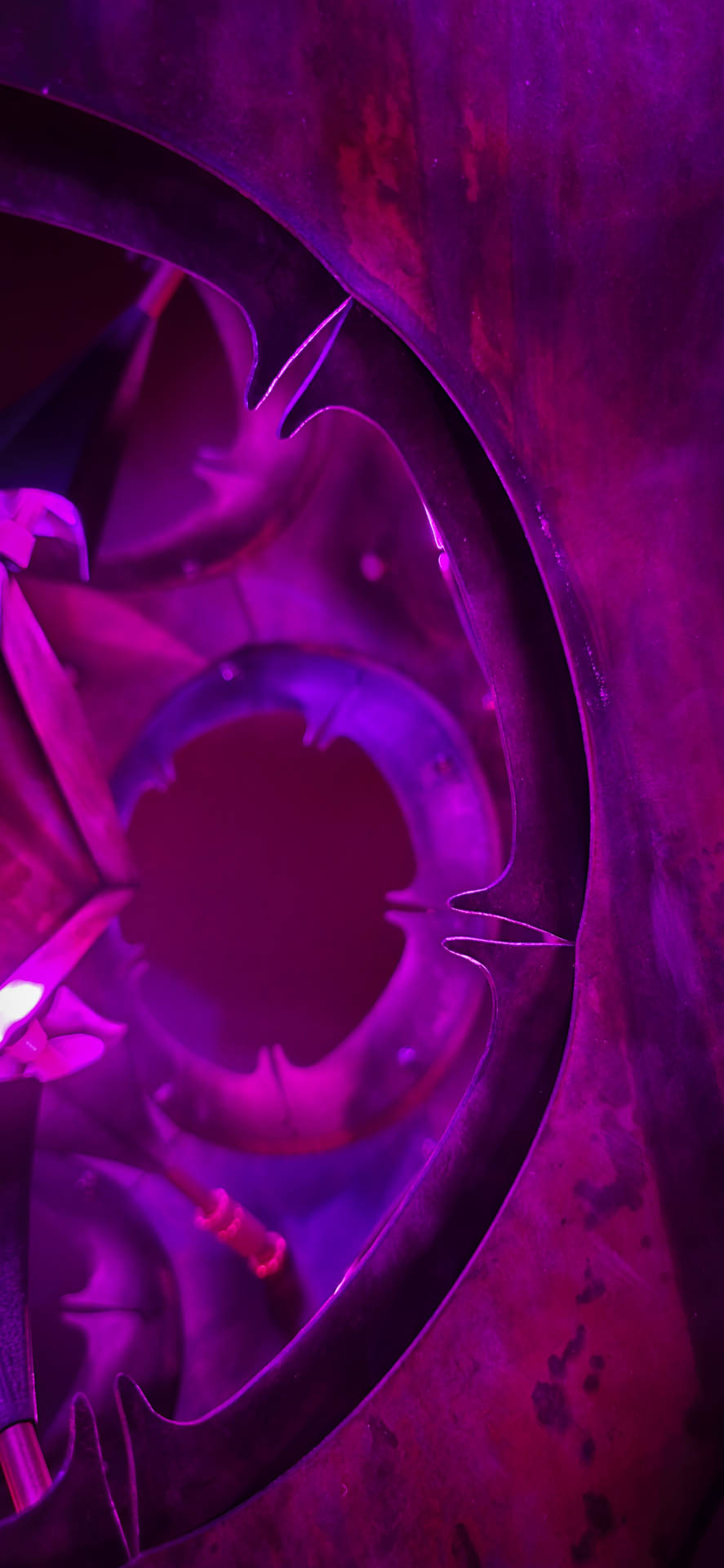
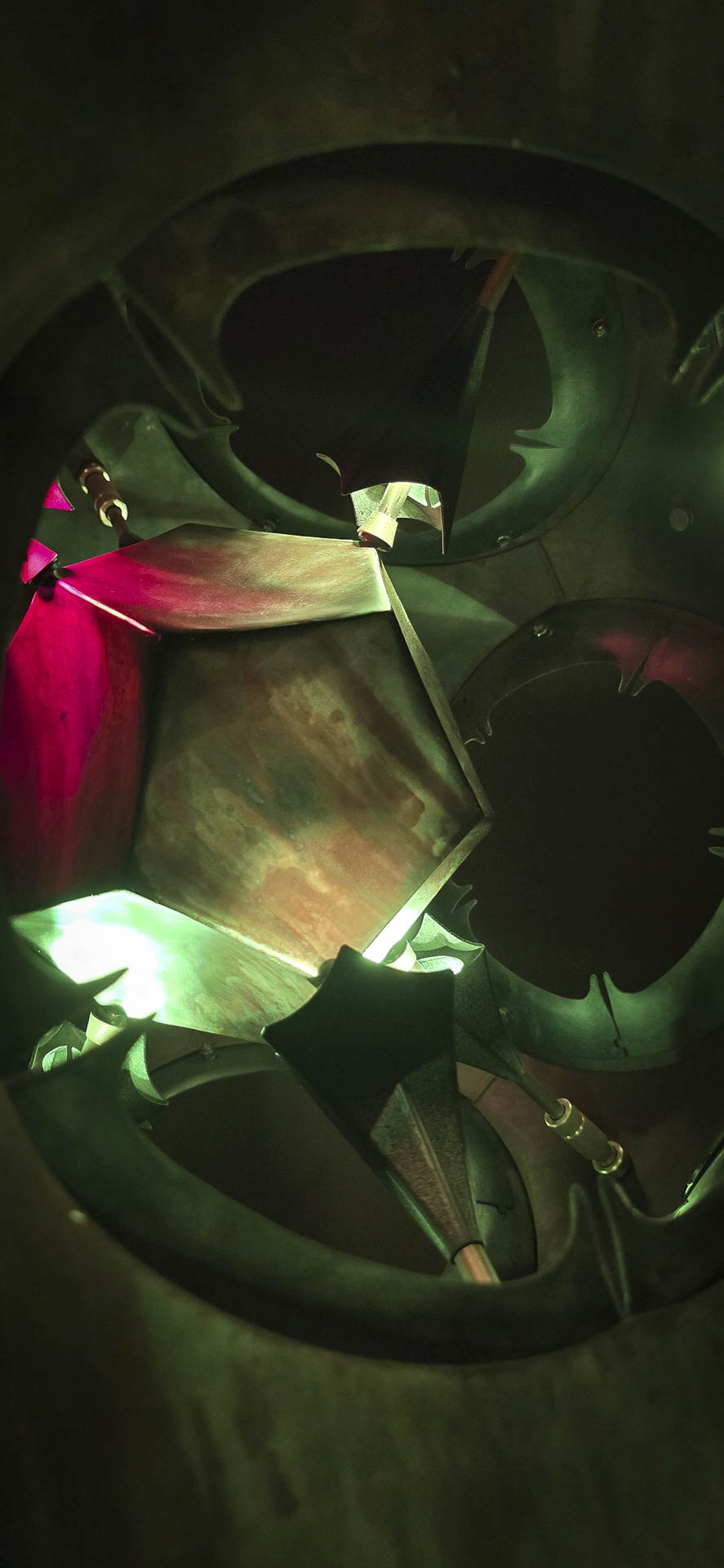

The Radiolaria Installation will consist of approximately six sculptural forms inspired by the intricate, symmetrical skeletons of microscopic marine plankton known as radiolarians. These sculptures will range in size from three to twelve feet in diameter, creating a sense of walking among ancient and imagined life forms magnified to monumental scale.
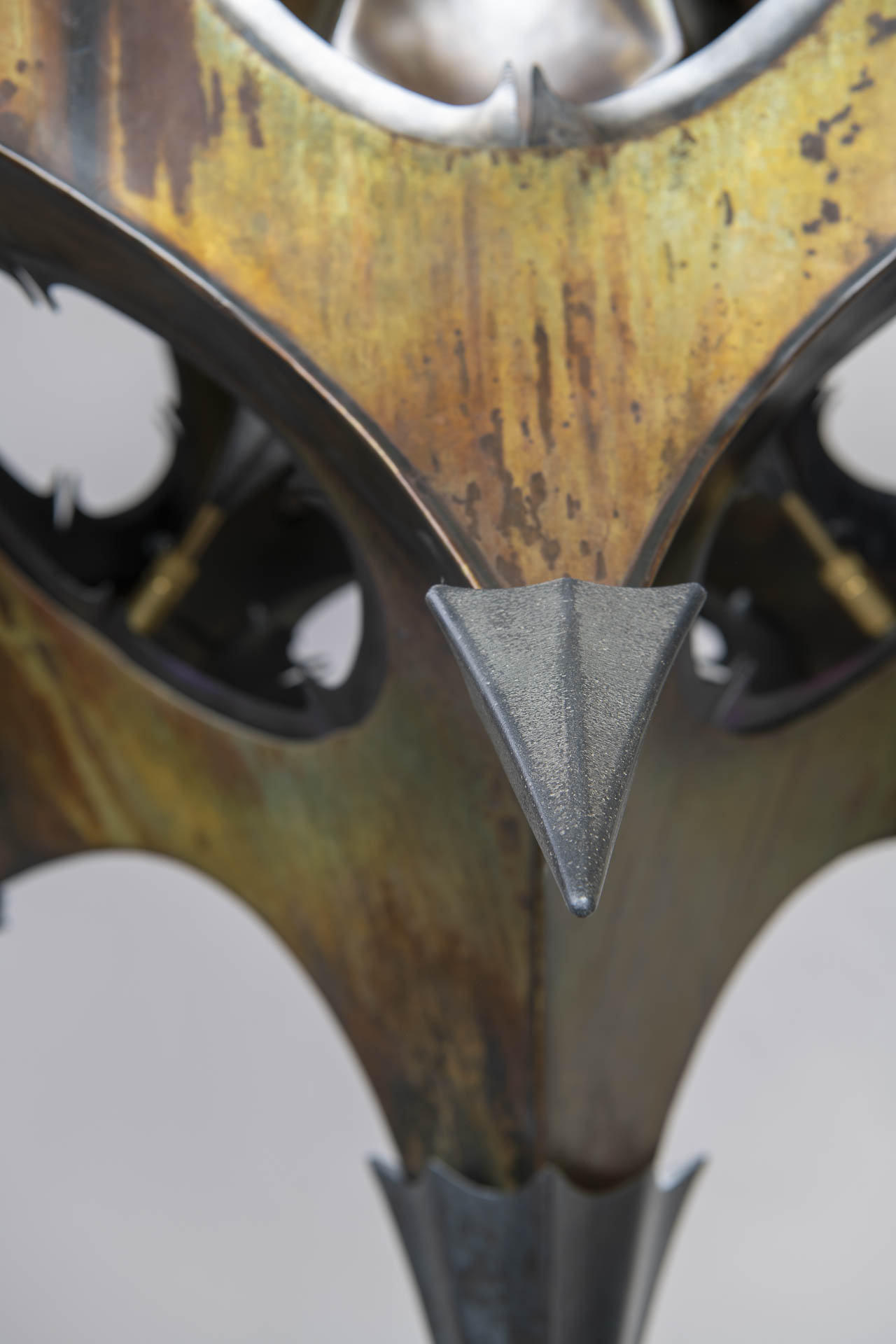
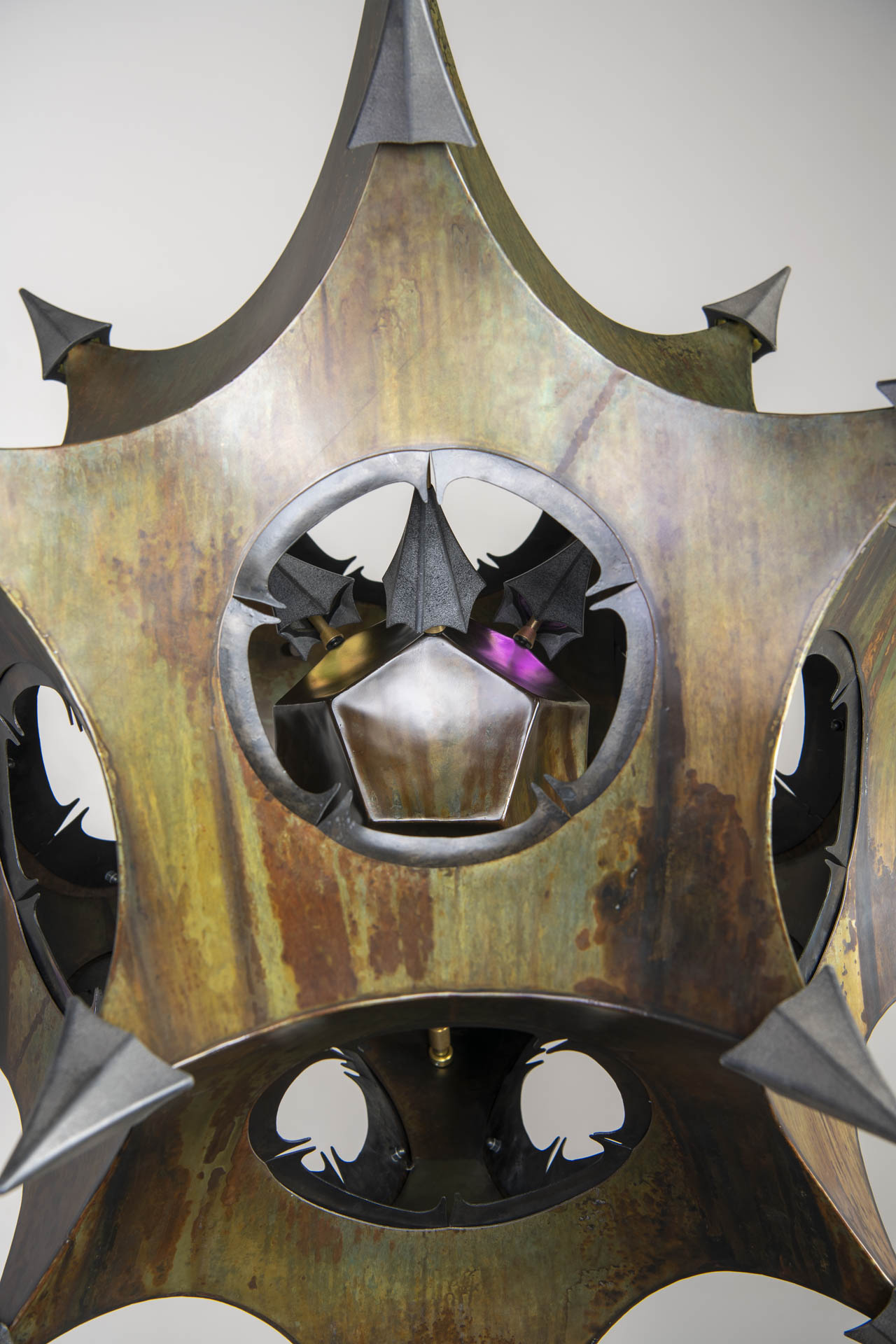
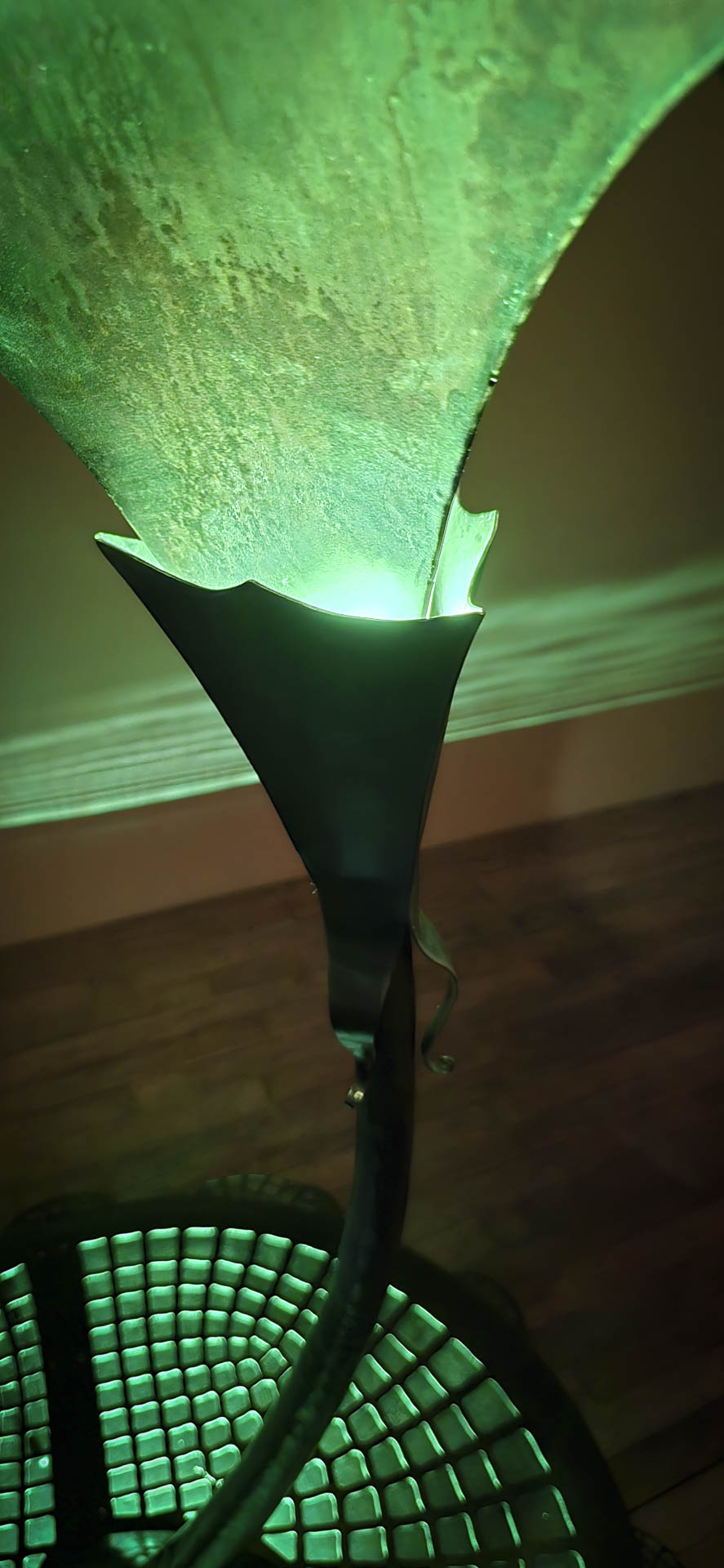
Each sculpture will be handcrafted from wrought iron, sheet metal, and fiberglass resin, materials chosen for their strength, malleability, and ability to transmit light. Internal LED illumination will bring the sculptures to life after dark — light will pulse, shimmer, and breathe, evoking the subtle rhythms of living organisms drifting through the ocean’s depths.
The sculptures will be arranged along a winding path, encouraging visitors to move through the field as if exploring a microscopic seascape. The lighting will evolve as guests walk — shifting from the soft blues and greens of Earth’s primordial oceans to warmer tones representing present-day seas, and finally to otherworldly hues that suggest life beyond our planet.
Accompanying the visual experience will be a layered soundscape of ancient oceanic ambience, present-day marine recordings, and speculative sounds of distant extraterrestrial waters. The result will be a fully immersive environment that engages sight, sound, and imagination — a meditation on time, evolution, and the shared origins of life.
The visual impact will be both tranquil and awe-inspiring — a glowing constellation of organic structures rising from the landscape, transforming the night into a living sea of light.
Artistic Process and Material Exploration:
We are excited to continue developing our Radiolarian series, inspired by the mathematical and organic forms found in nature. These intricate geometries draw us into the deeper relationship between natural structures and the artist-built process — a dialogue between biology, mathematics, and craftsmanship.
Our ongoing studies explore the boundaries of design software and material behavior as we refine the use of steel, resin-fiberglass, patinas, and lighting. Through this work, we have developed a comfortable and balanced creative palette where digital design meets the hand-forged and sculpted form.
After producing our first three Radiolarians, we now have a much clearer understanding of what materials, structures, and fabrication techniques perform best. This process of experimentation — from hand-forged steel frames to illuminated resin shells — has given us the confidence to expand the series. The lessons learned from the dodecahedron form are now guiding new explorations into other natural geometries and life-inspired structures.
Our goal is to translate the invisible architecture of microscopic life into large-scale, luminous sculptures that invite viewers to reflect on the universal patterns shared by all living systems.
