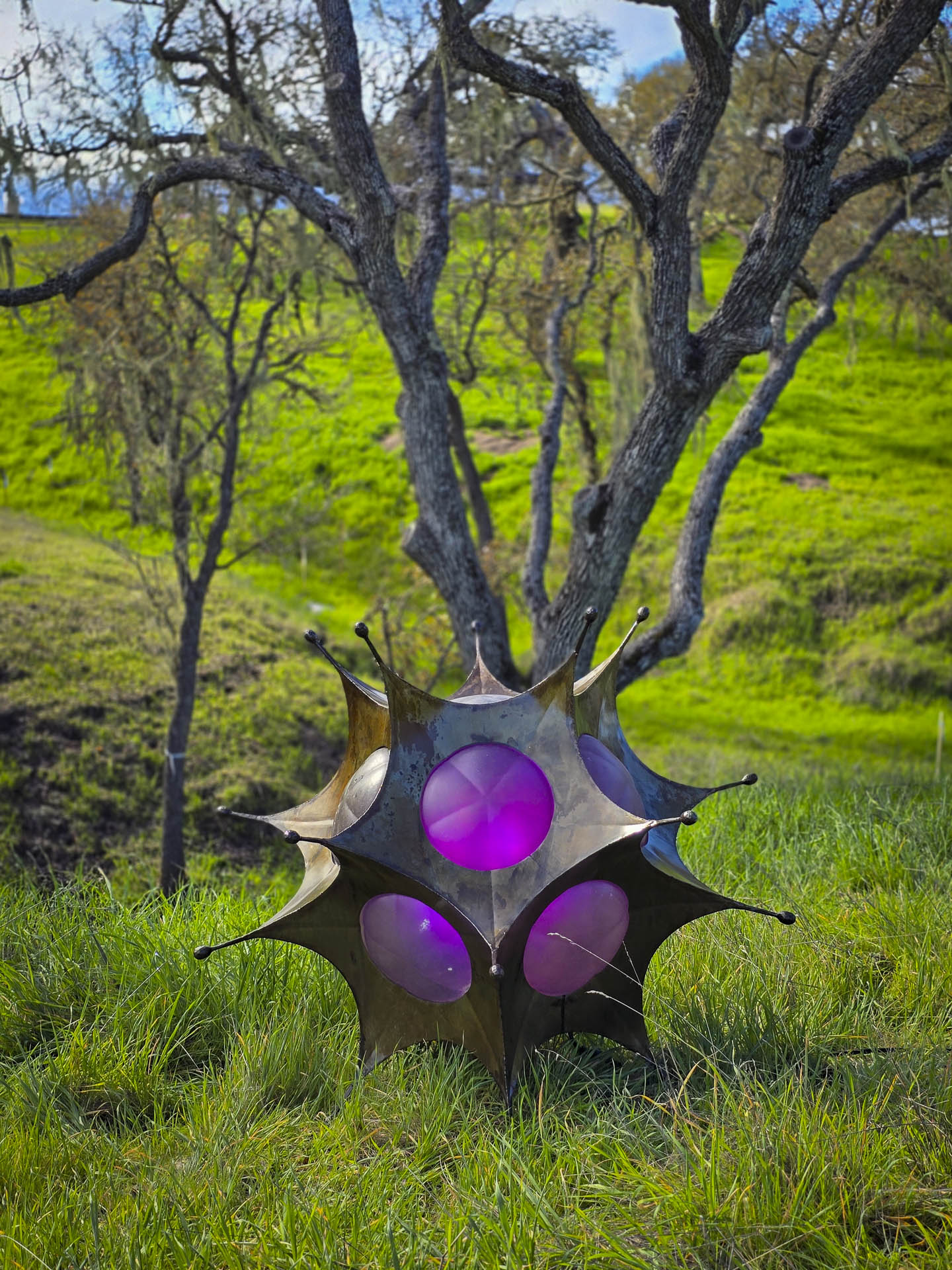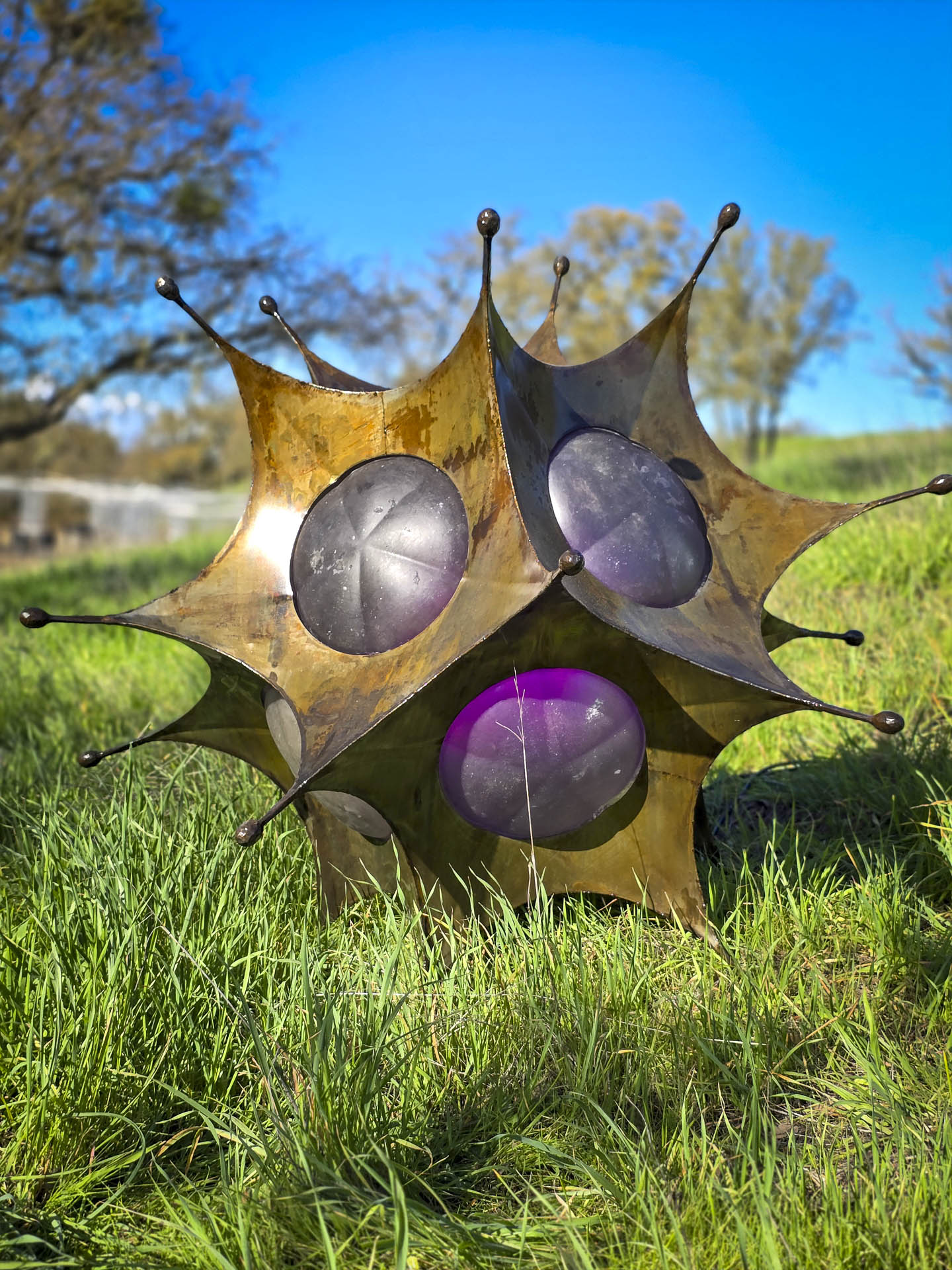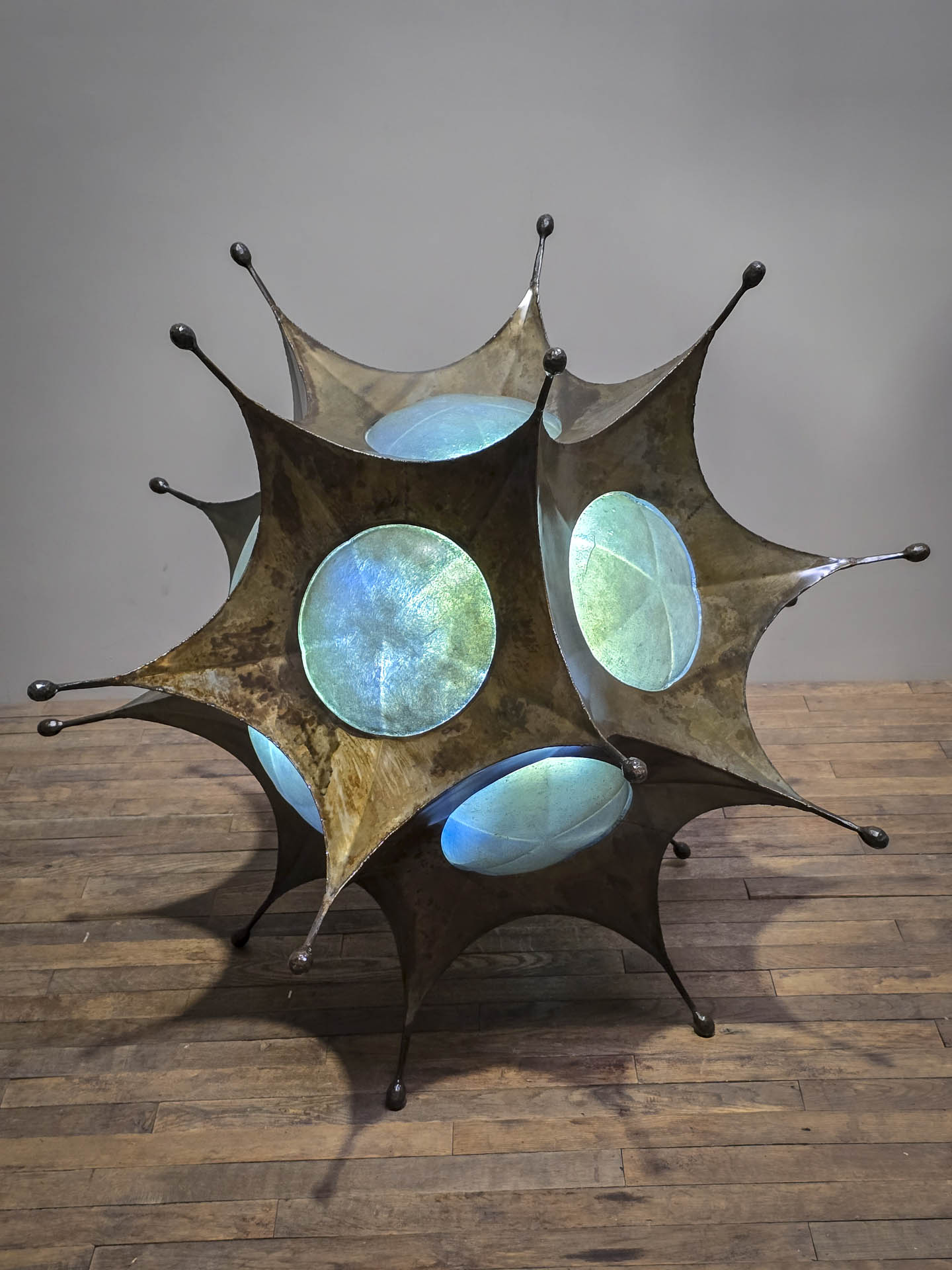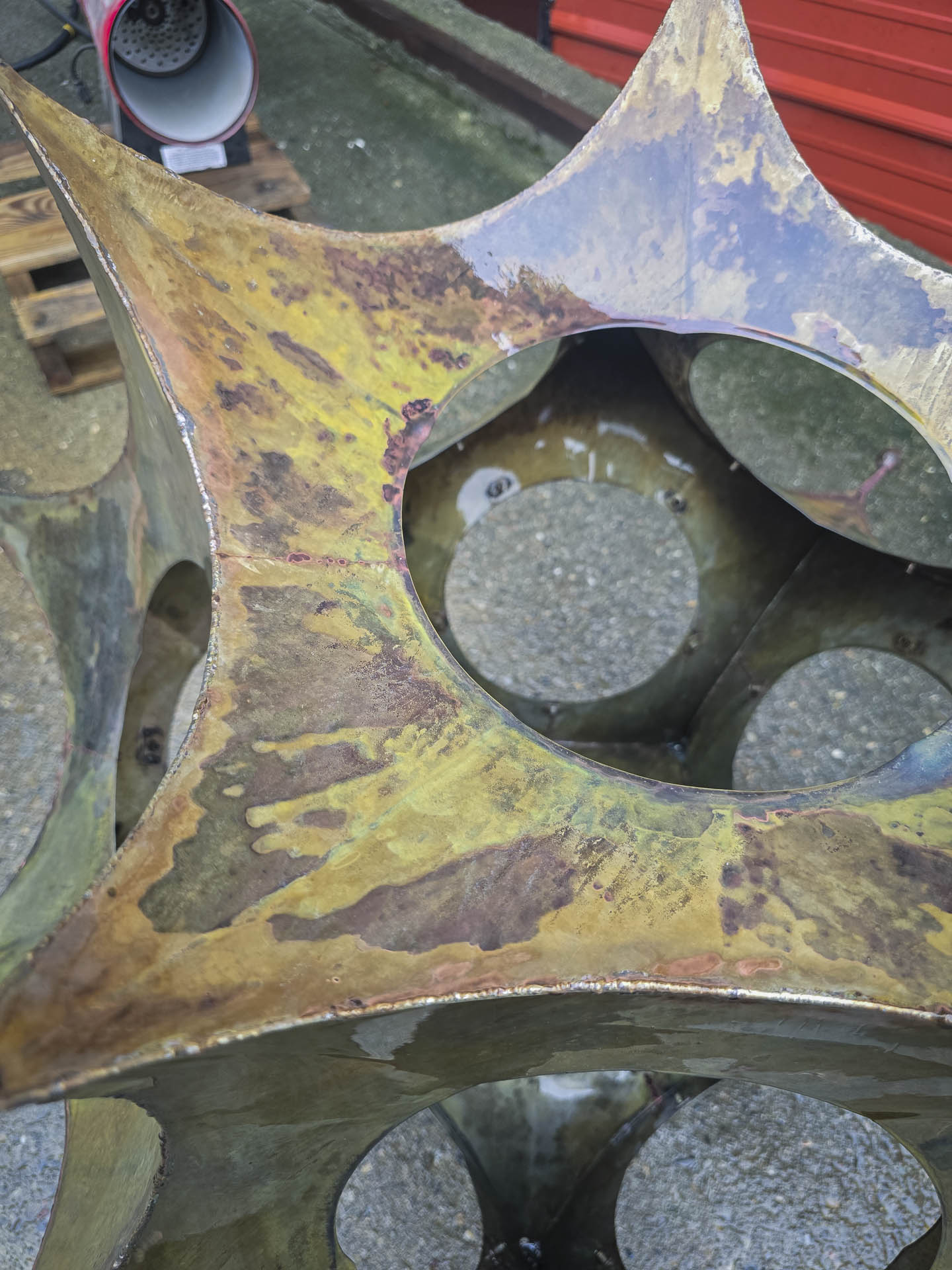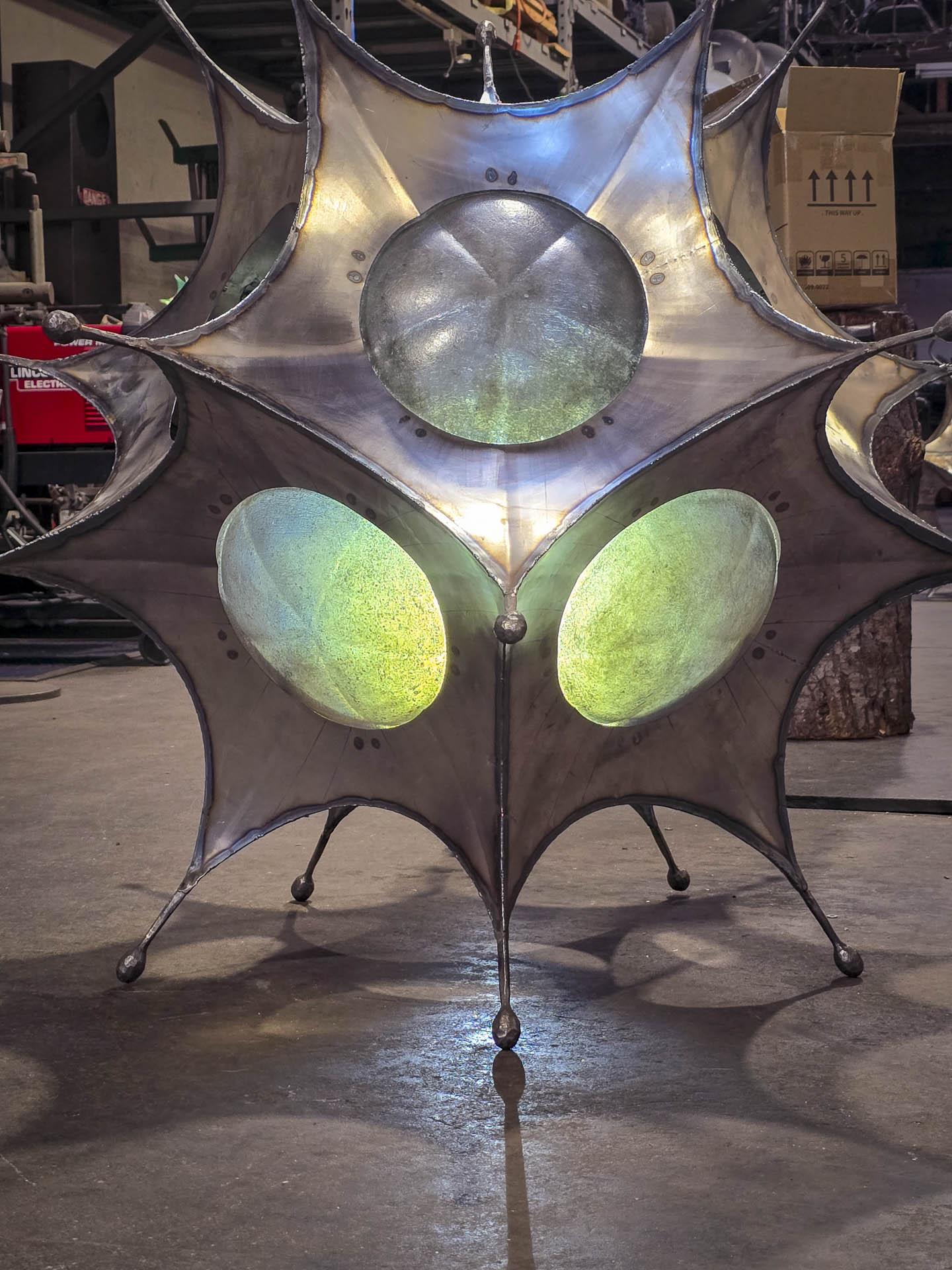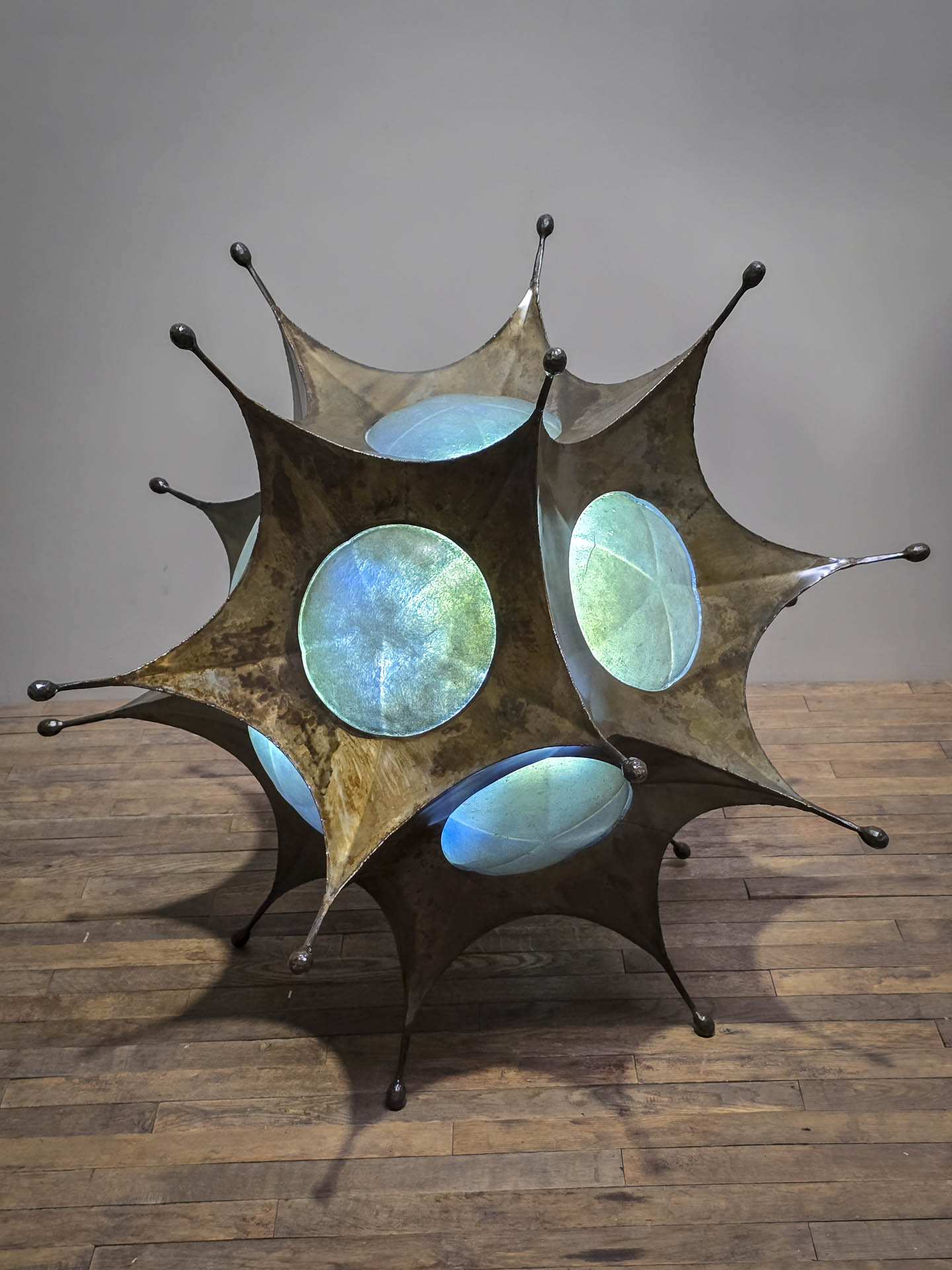

Radiolarian Caor Radiolarians Caor Radiolarians are microscopic marine organisms that have drifted through Earth’s oceans for more than 500 million years. Though invisible to the naked eye, they create some of the most intricate and mathematically beautiful structures found in nature. Each organism forms a delicate mineral skeleton — often spherical, radial, or lattice-like — made primarily of silica, producing an endless variety of geometric patterns and symmetrical forms. Found throughout the world’s oceans, radiolarians exist at many depths, from surface waters to the deep sea. When they die, their silicate skeletons slowly fall to the ocean floor, becoming part of the sedimentary record of the Earth. Their preserved forms are so distinct and abundant that geologists use them to study ancient climates and date layers of rock through a process known as stratigraphy. What draws us to radiolarians is the balance between precision and irregularity — how nature produces structures that feel engineered yet alive. Their forms suggest a shared language between biology, mathematics, architecture, and sculpture. Though microscopic in scale, they carry a monumental presence when enlarged, revealing hidden patterns that connect natural systems across time and scale. Our work explores these forms as both scientific inspiration and artistic language, translating the invisible architecture of microscopic life into large-scale sculptural environments of steel, light, texture, and shadow.
Note: Designs can be adjusted in size and height with multiple finish options, along with a variety of available finishes in medium base or candelabra socket sizes, to customize the look of the chandelier. Listed specifications are for the chandelier as shown.