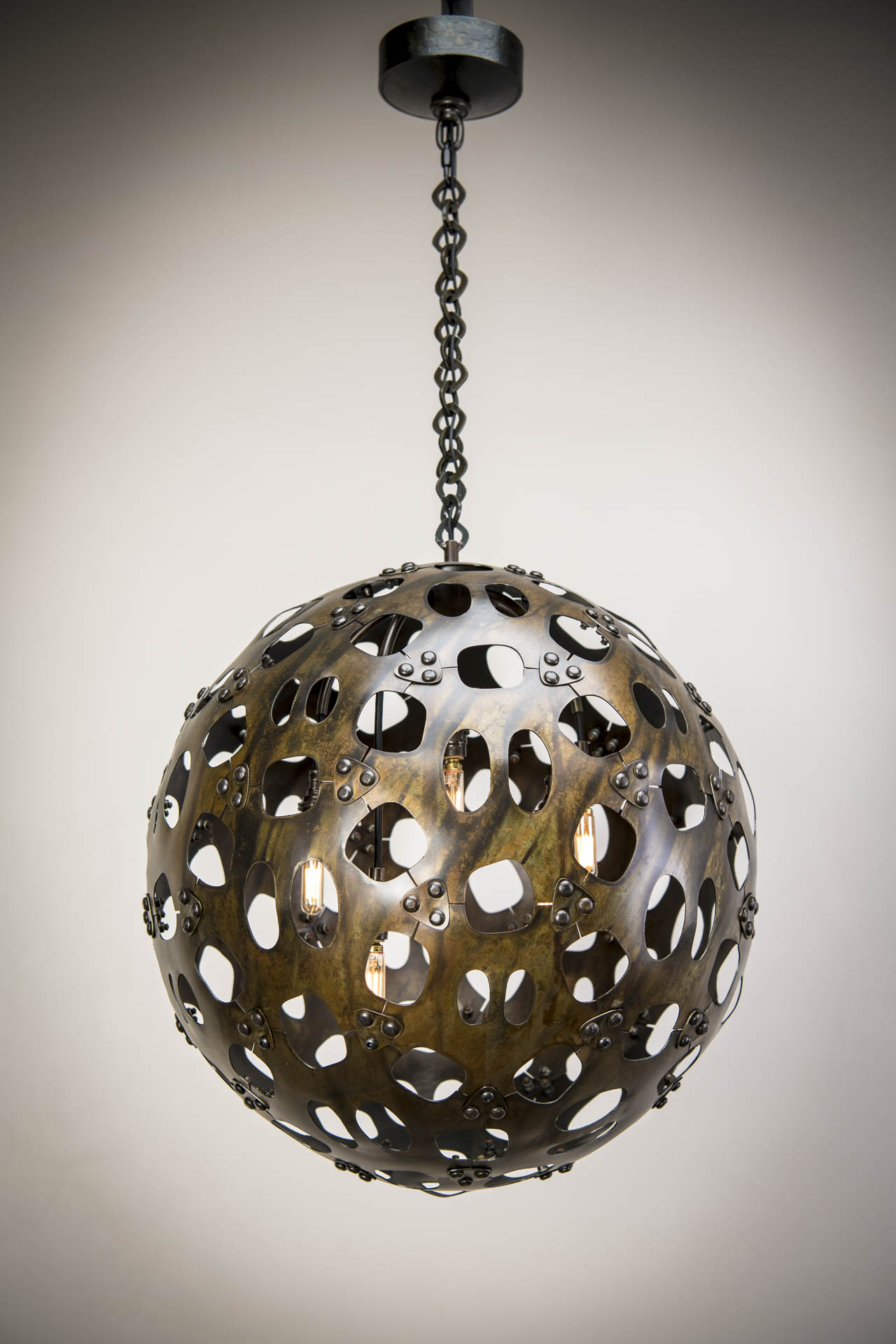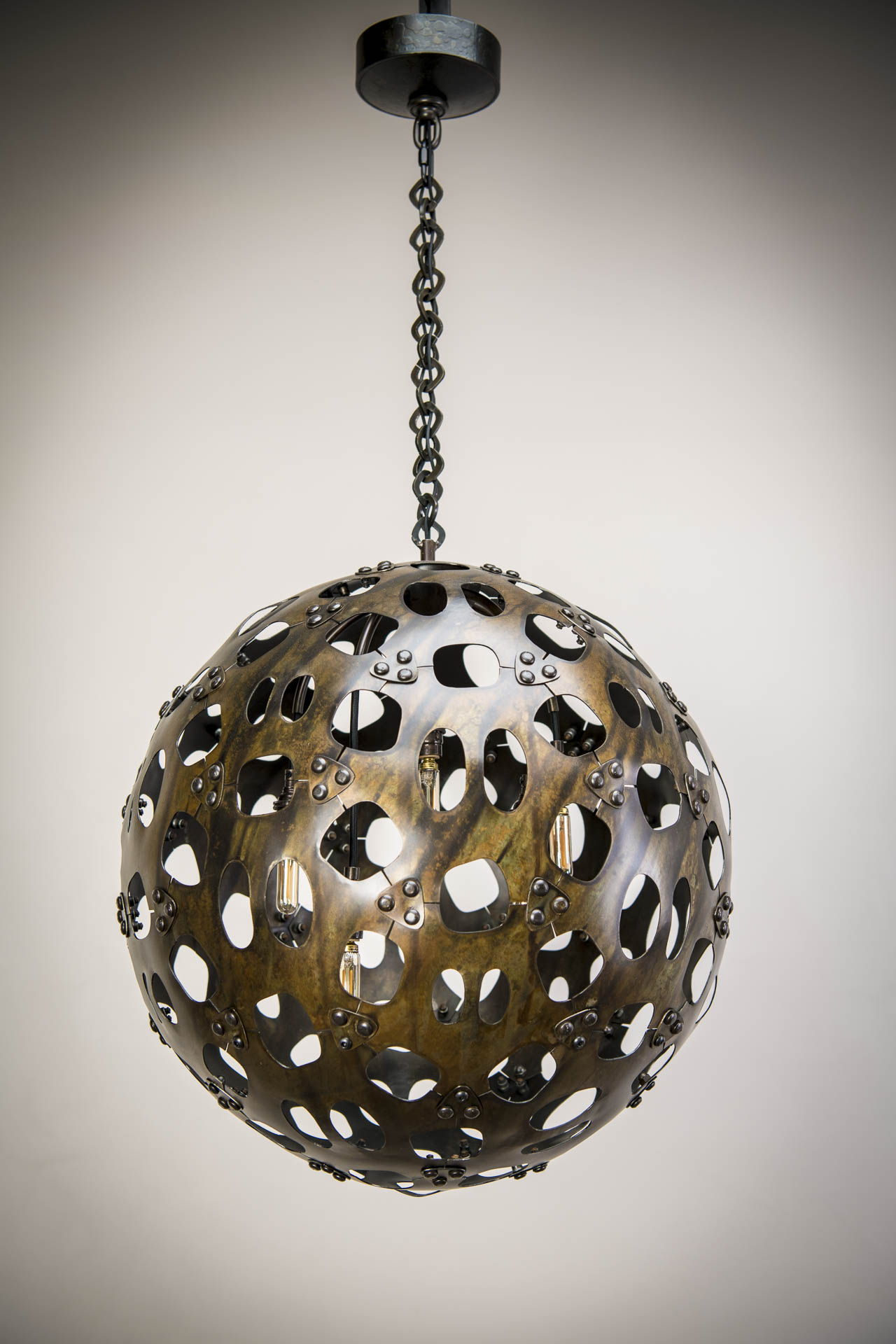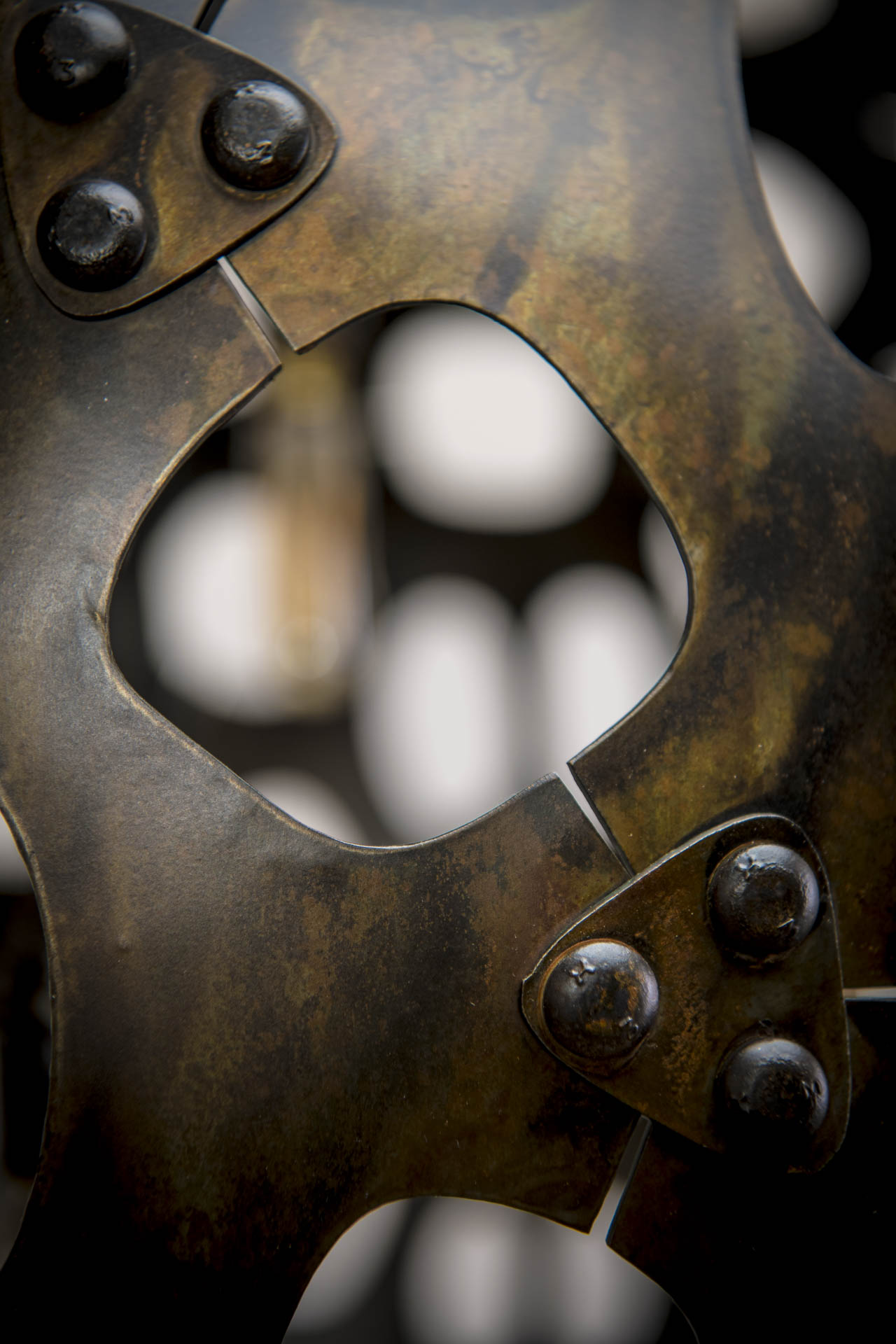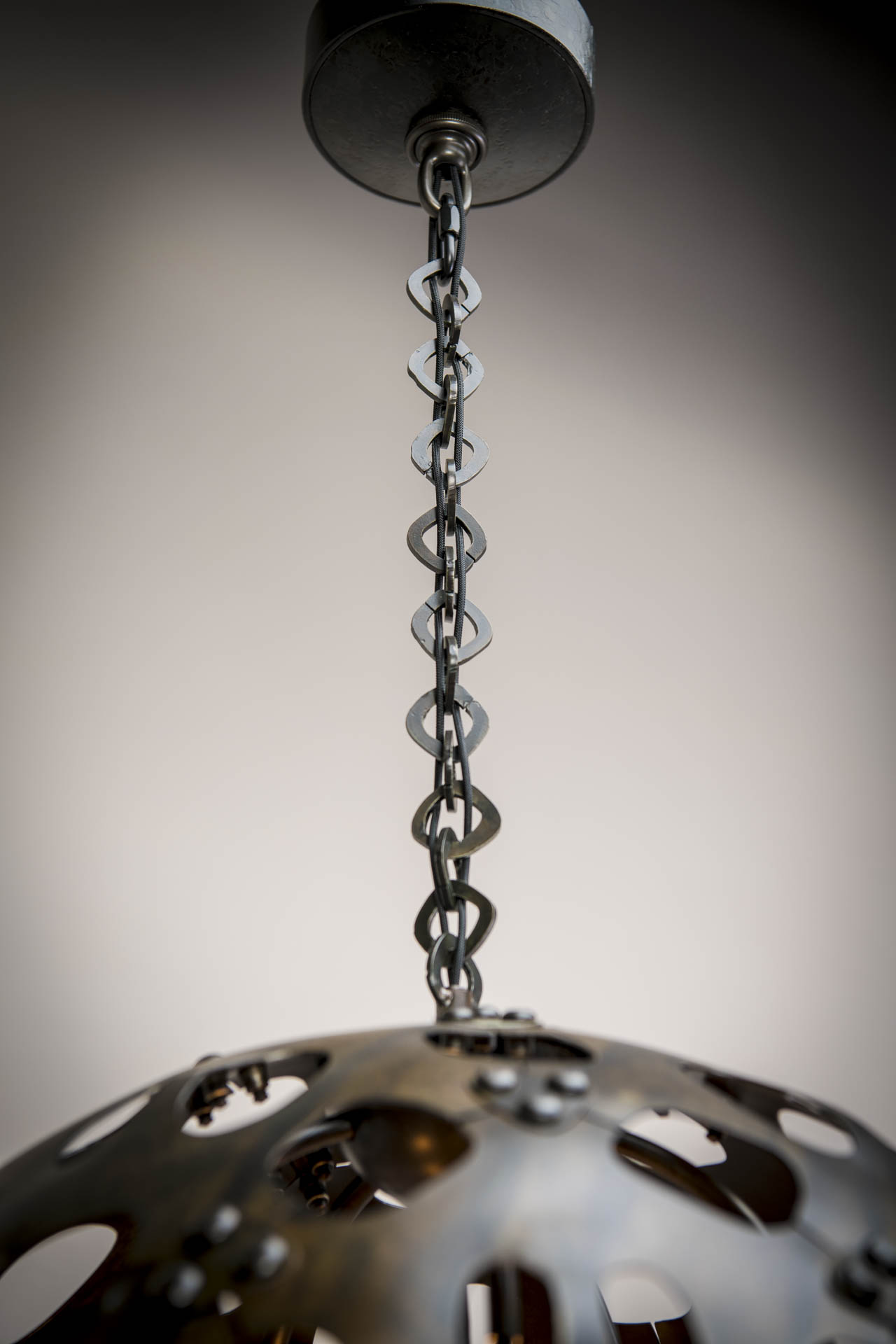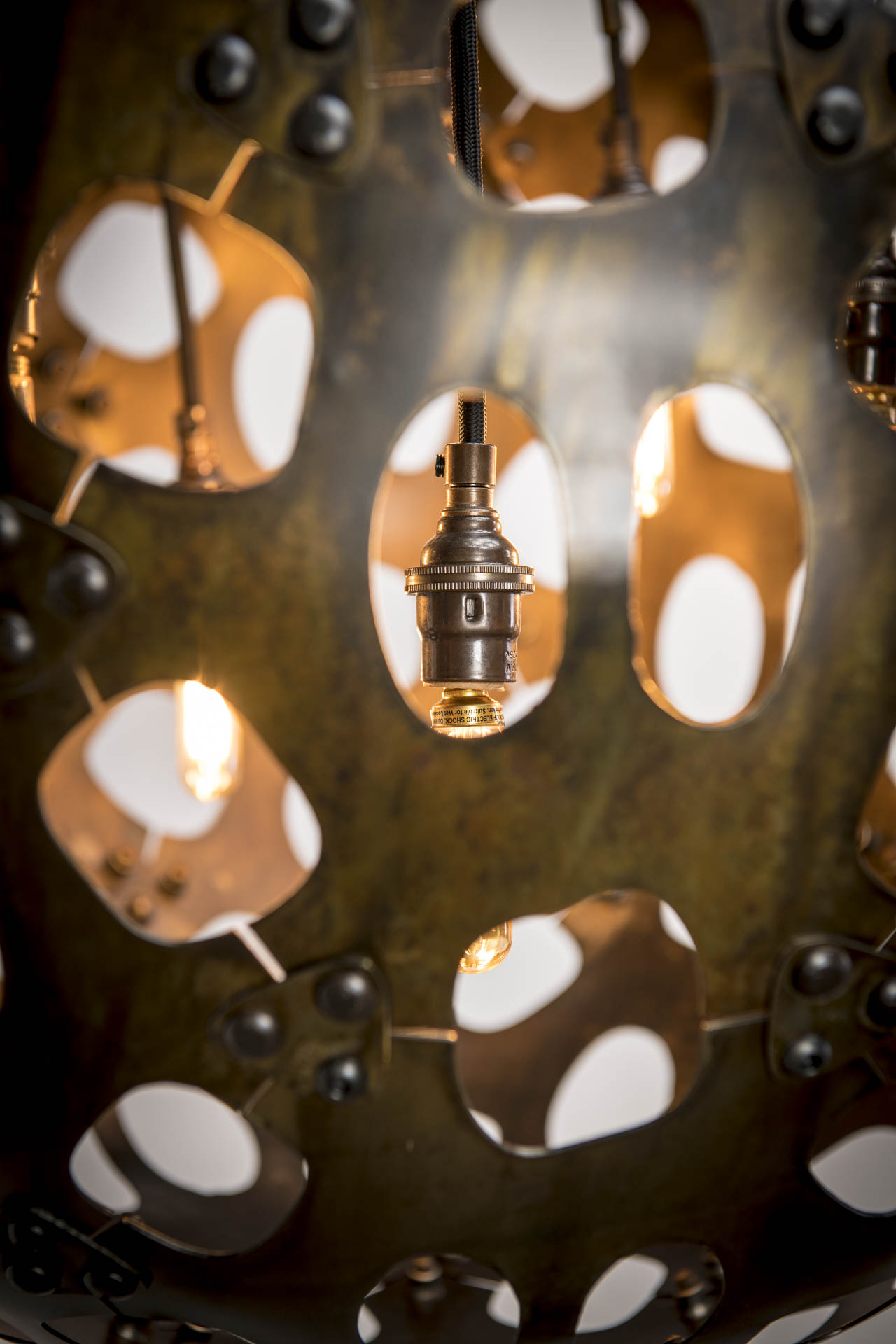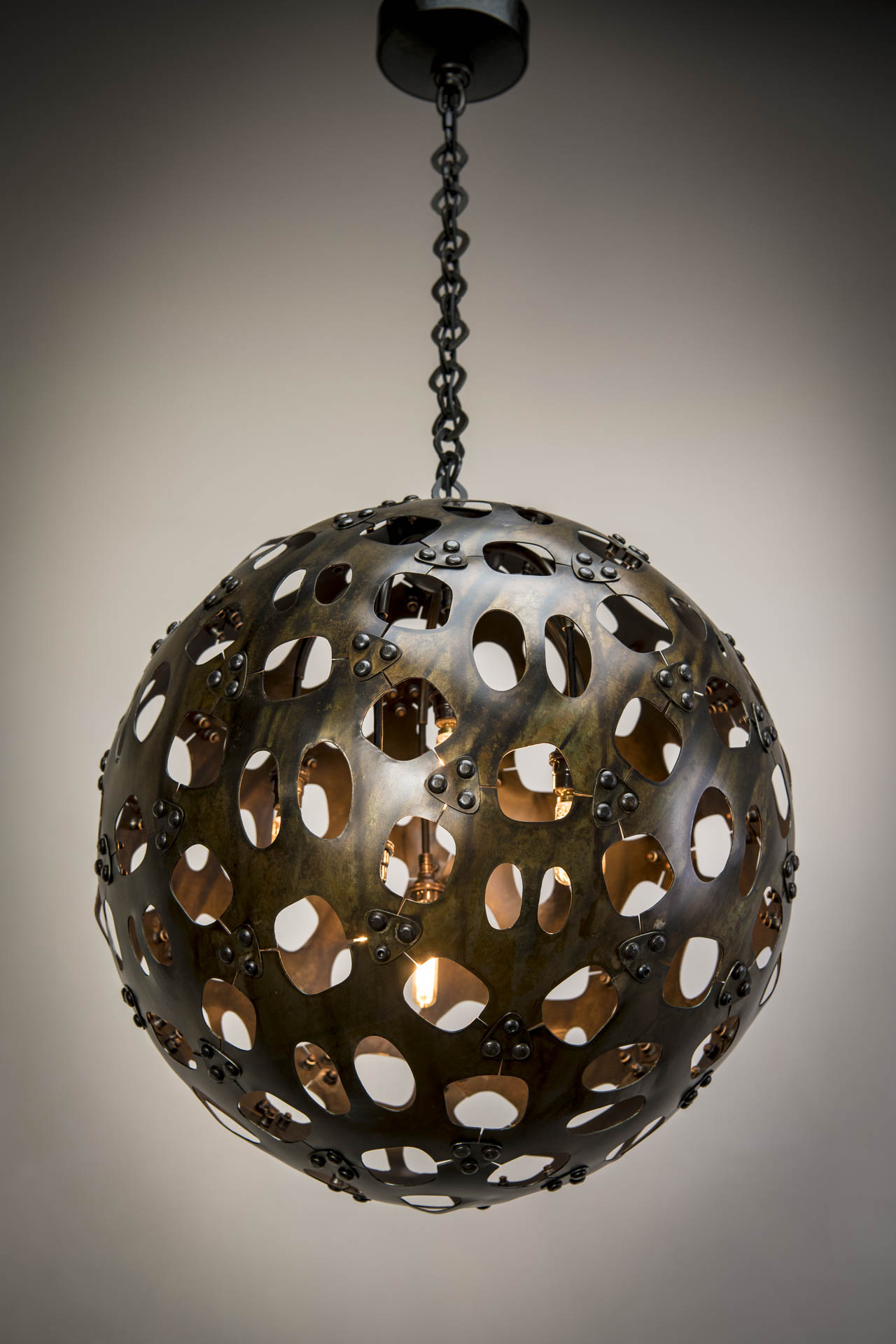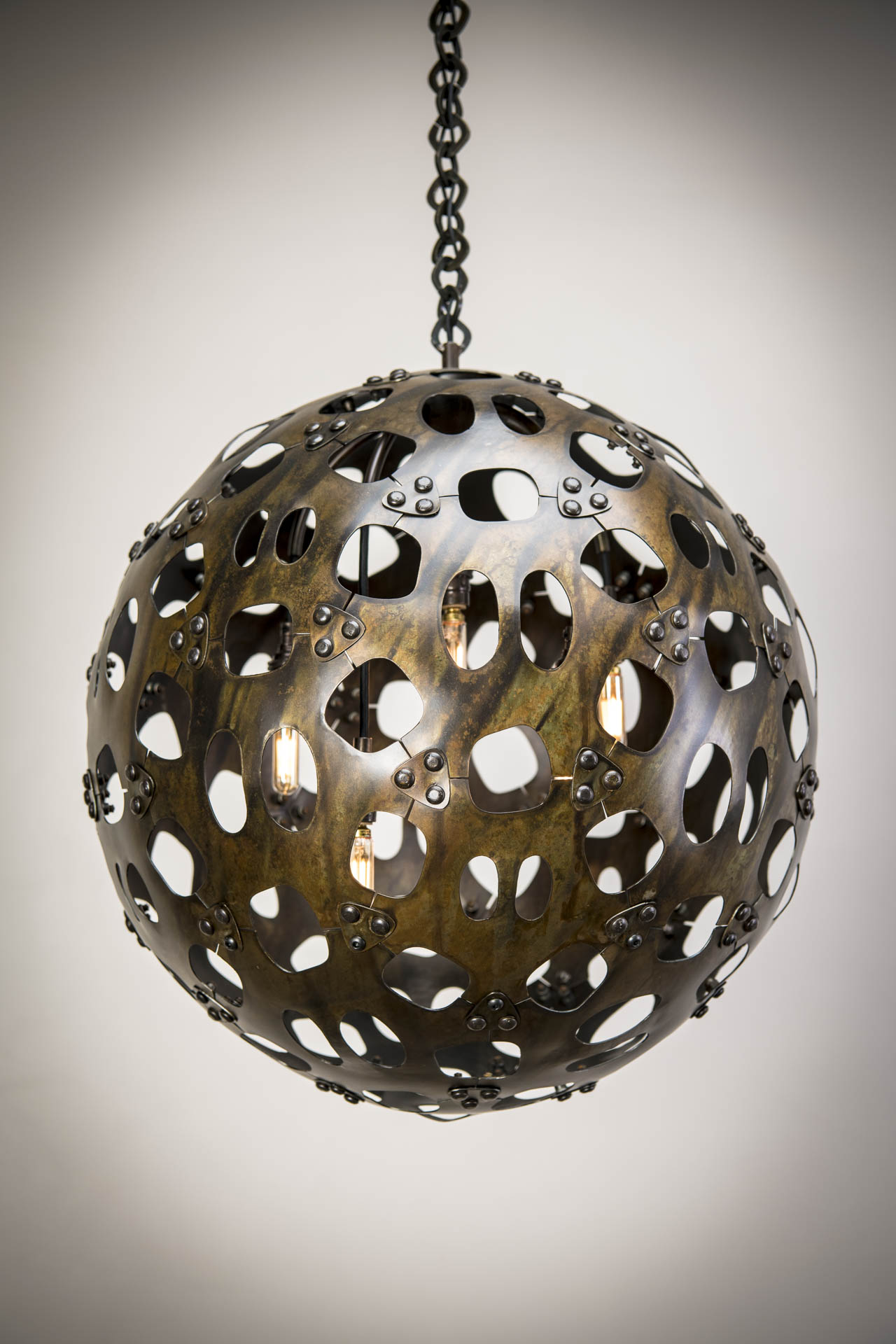
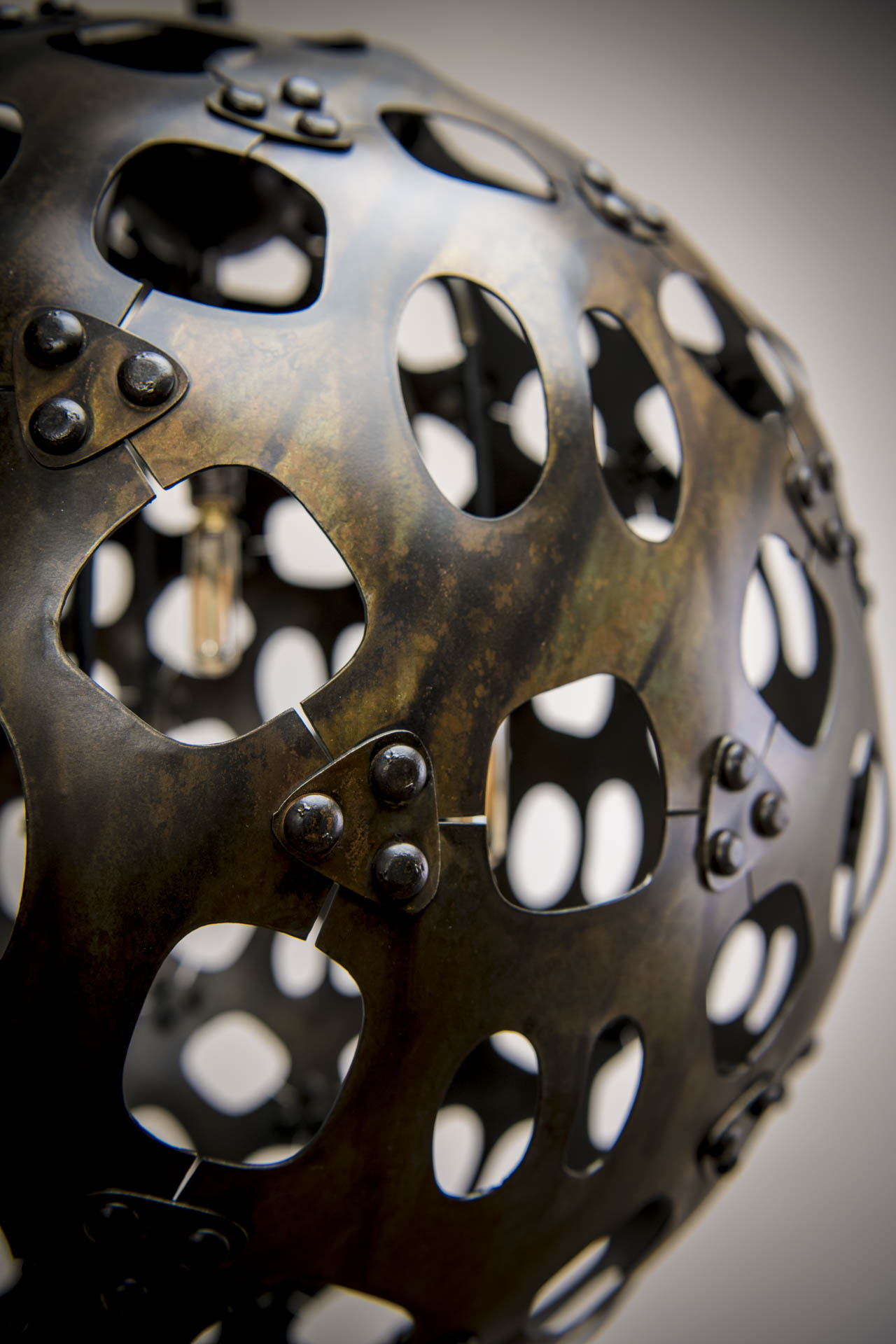

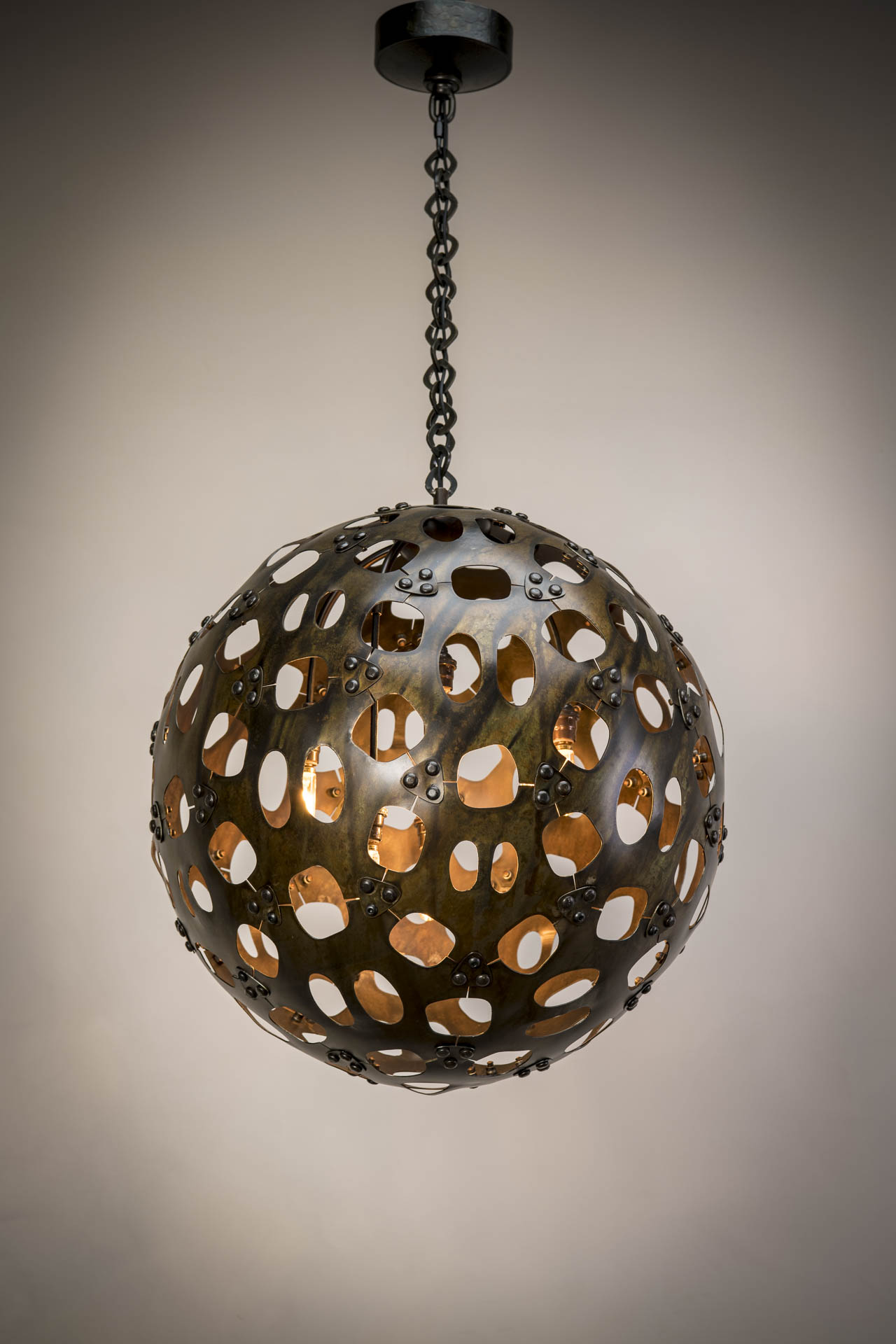
The radiolarian does not have a skeleton. It has a lorica — Latin for body armour, the coat of mail Roman soldiers wore into battle. For the radiolarian, the lorica is its silica shell: a structure grown from seawater, geometric in its precision, built to protect something almost impossibly small and alive inside it. Scientists have used this word for the radiolarian's shell for centuries. It is the right word. Nothing else fits as well. In the tradition of Old Irish Christianity, a lorica is also a prayer. The Lorica of Saint Patrick — one of the oldest surviving texts in the Irish language — is a breastplate prayer, an invocation of protection from every direction, above and below, left and right, front and back. It asks for light above the speaker, light around them, light to guide and shelter. A ceiling fixture that hangs overhead and casts warmth across everything beneath it is a lorica in exactly this sense. Loricata brings the Radiolaria series indoors. At 22 inches in diameter and dropping 42 inches from the ceiling, it wears the Golden Mean finish — the same warm surface that defines Caor and Izar, developed for the Golden Mean Snail Car and named for the mathematical ratio that governs the nautilus shell and the radiolarian skeleton alike. Six candelabra sockets cast the particular warmth of flame-shaped light — not the cold precision of deep ocean, but something older and more domestic. A hearth held overhead. The geometry is still there. The latticed steel still traces the dodecahedron skeleton of a Spumellaria radiolarian, the same form that has drifted through the world's oceans for half a billion years. Here it is scaled for a room, for a table beneath it, for the quality of attention that happens when people gather under shared light. The radiolarian built its lorica to protect what was inside it. Loricata does the same. Dorataspis loricata is a species of radiolarians in the family Dorataspididae. The Radiolaria are protozoa of diameter 0.1–0.2 mm that produce intricate mineral skeletons, typically with a central capsule dividing the cell into the inner and outer portions of endoplasm and ectoplasm. The elaborate mineral skeleton is usually made of silica. They are found as zooplankton throughout the global ocean. I have use these wonderful natural forms as an inspiration for my art lighting Radiolarians. Using CAD design to plasma cut metal parts then transforming these shapes using hand forging and automotive sheetmetal forming tools and techniques. Bringing these prehistoric microscopic creatures to glowing life.
Note: Designs can be adjusted in size and height with multiple finish options, along with a variety of available finishes in medium base or candelabra socket sizes, to customize the look of the chandelier. Listed specifications are for the chandelier as shown.